2026.03.14 – 2026.04.22
Antenna Space, Shanghai

2026.03.14 – 2026.04.22
Antenna Space, Shanghai
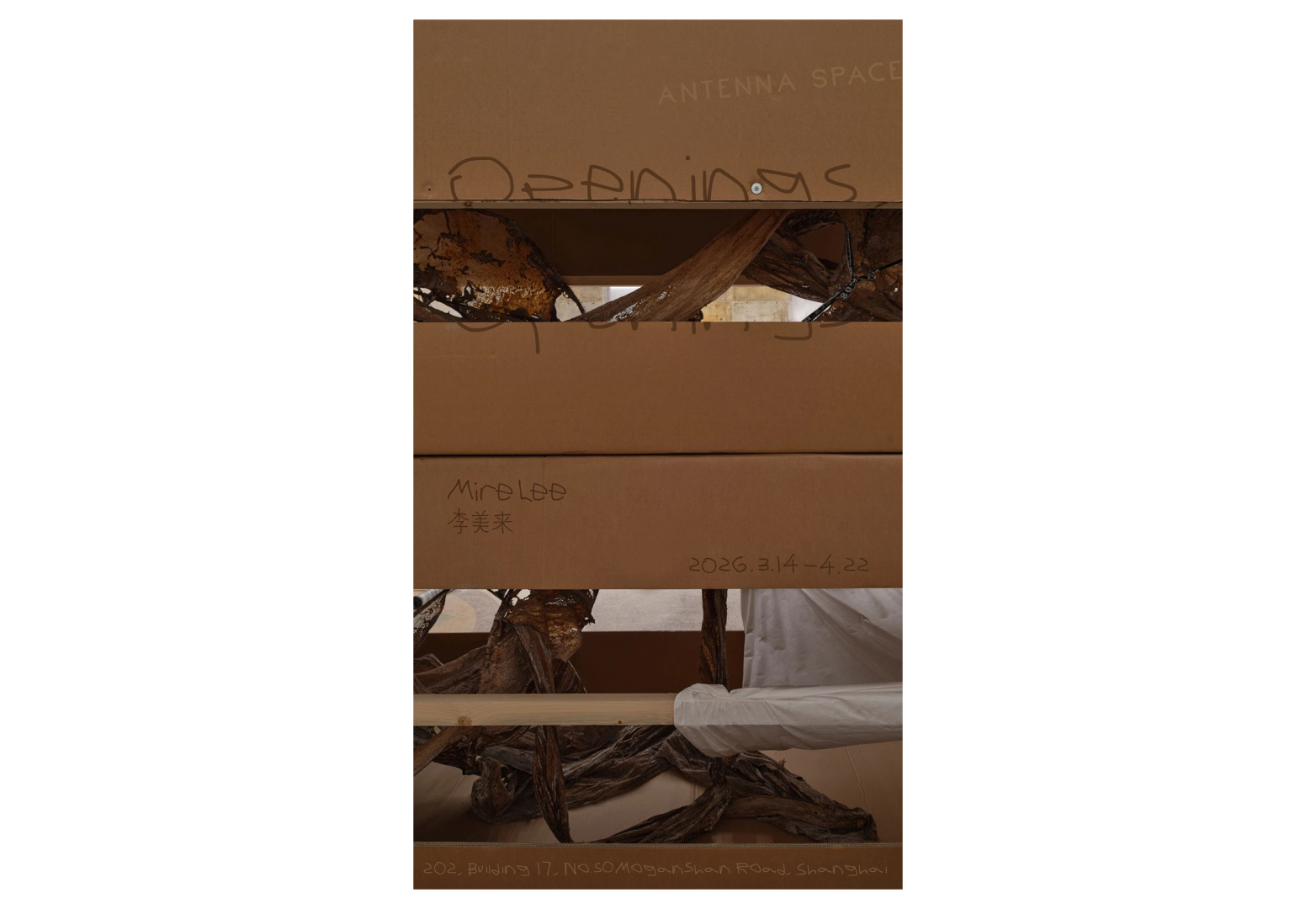
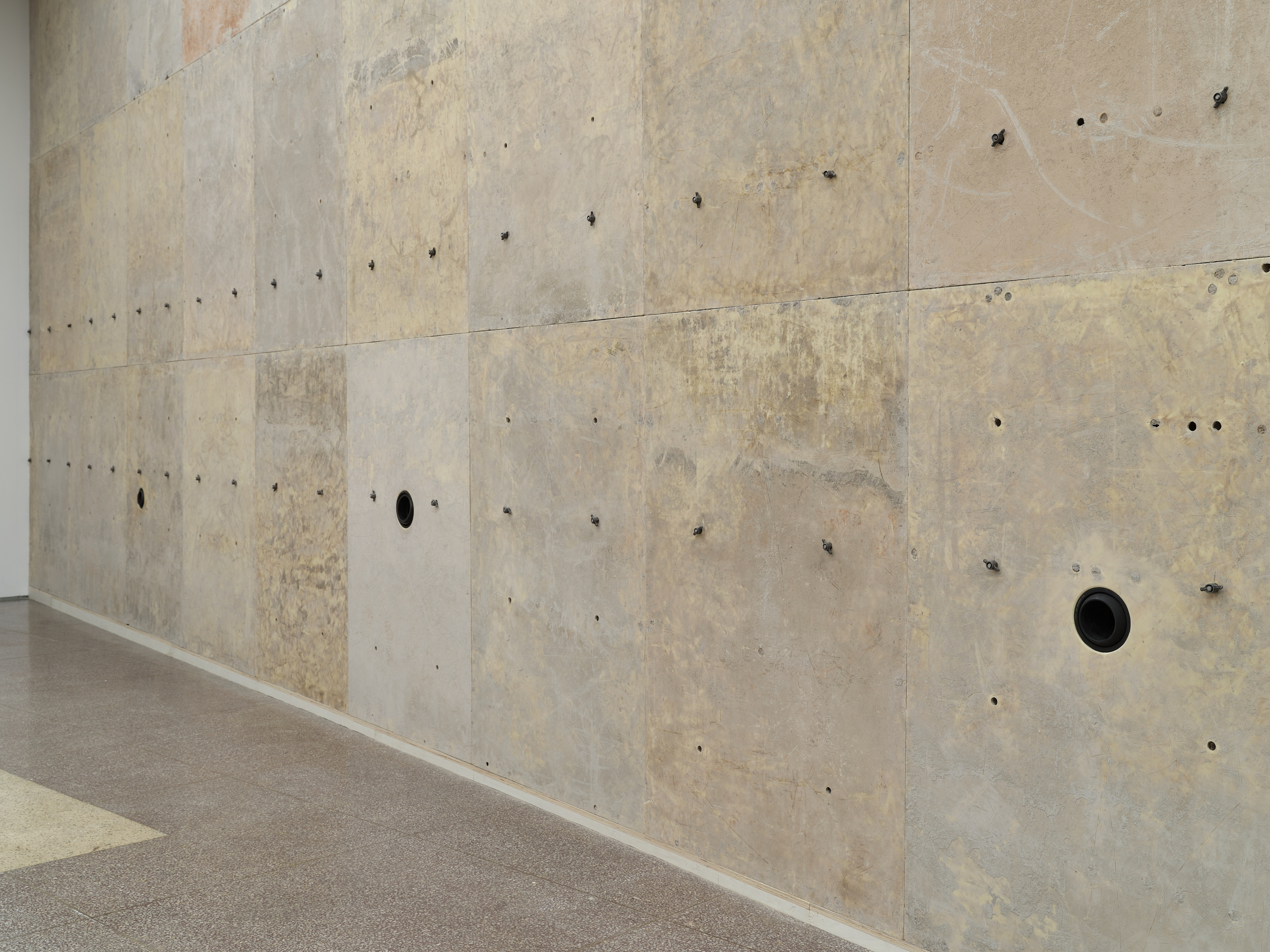
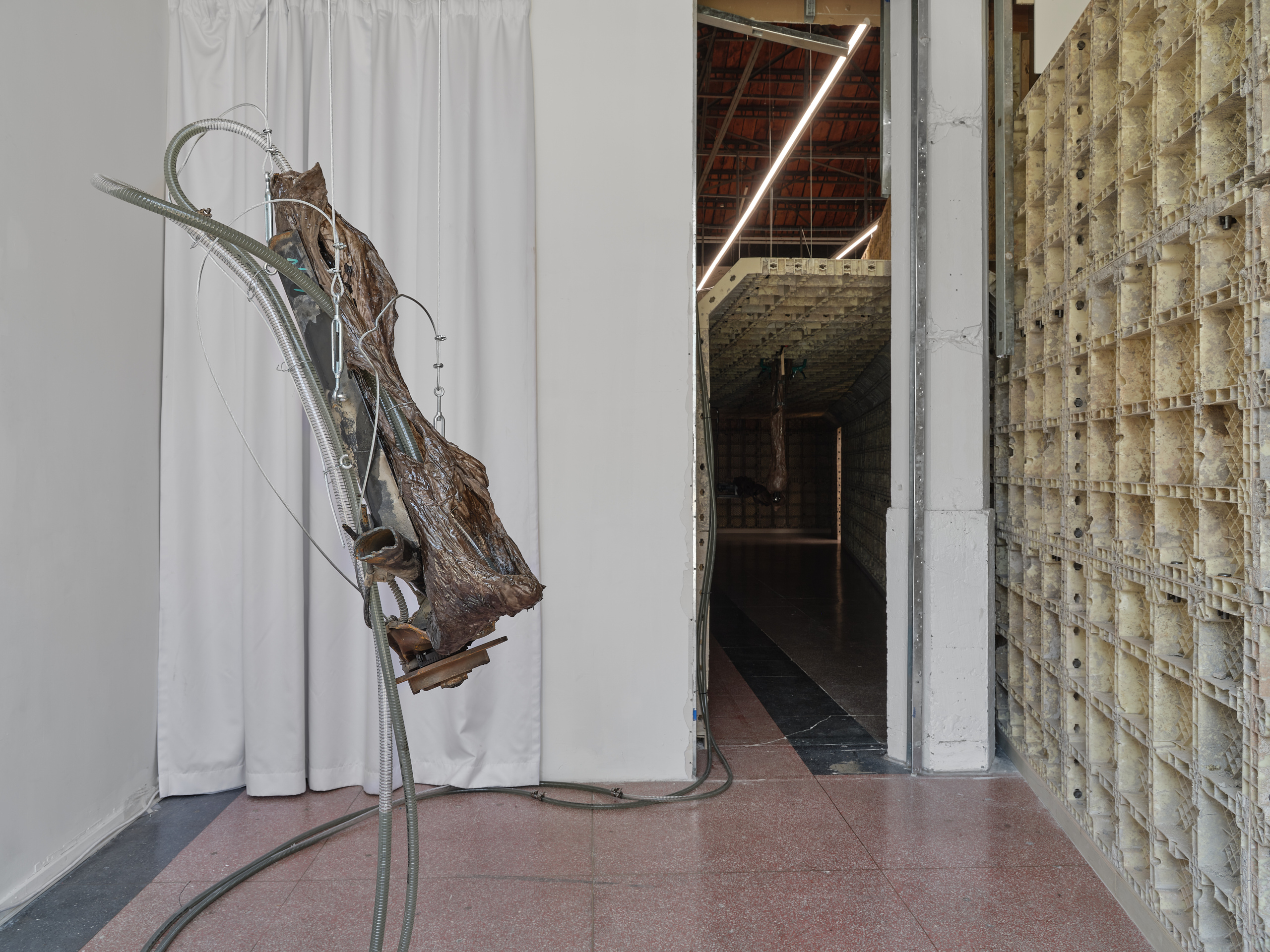
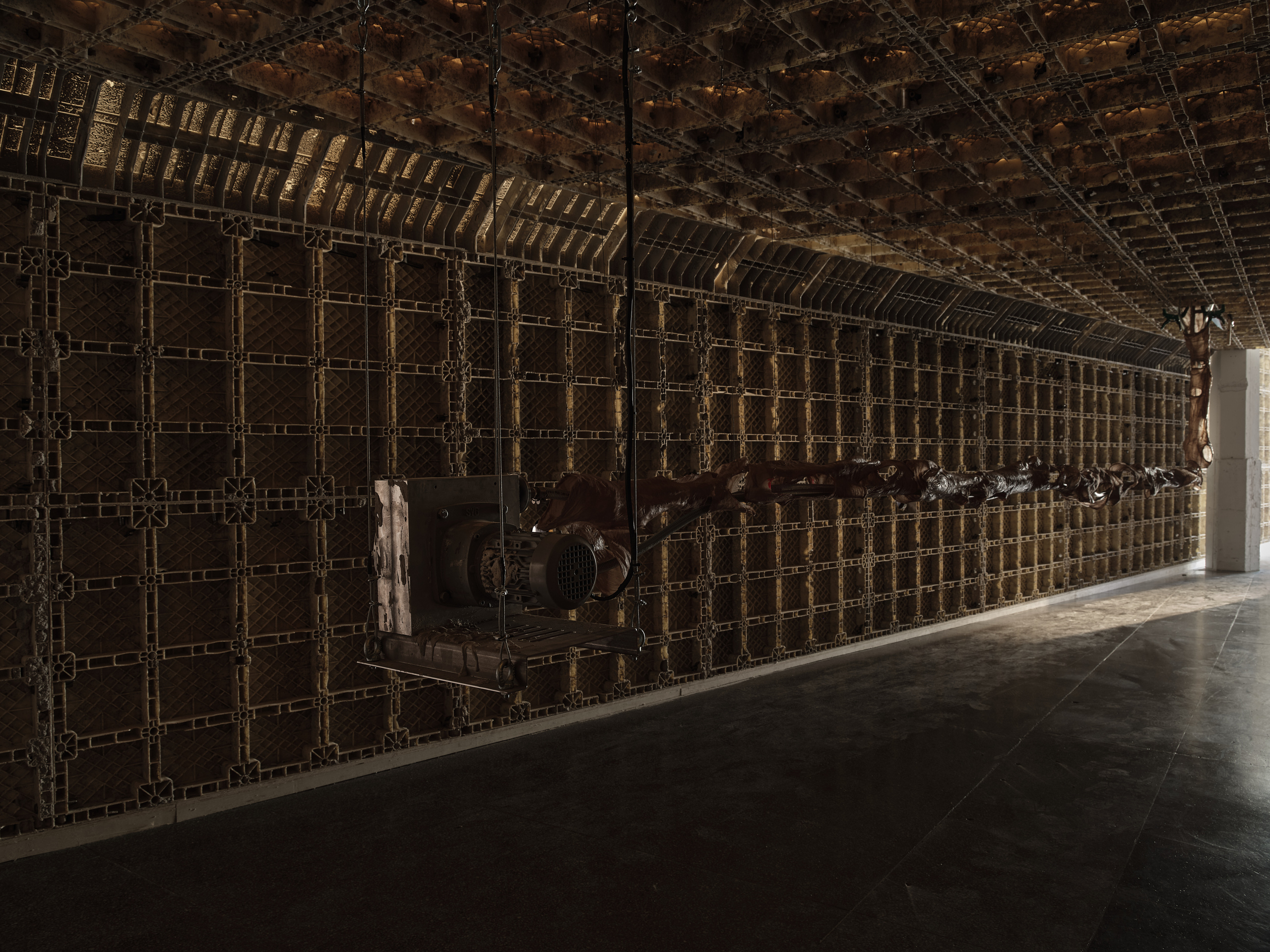
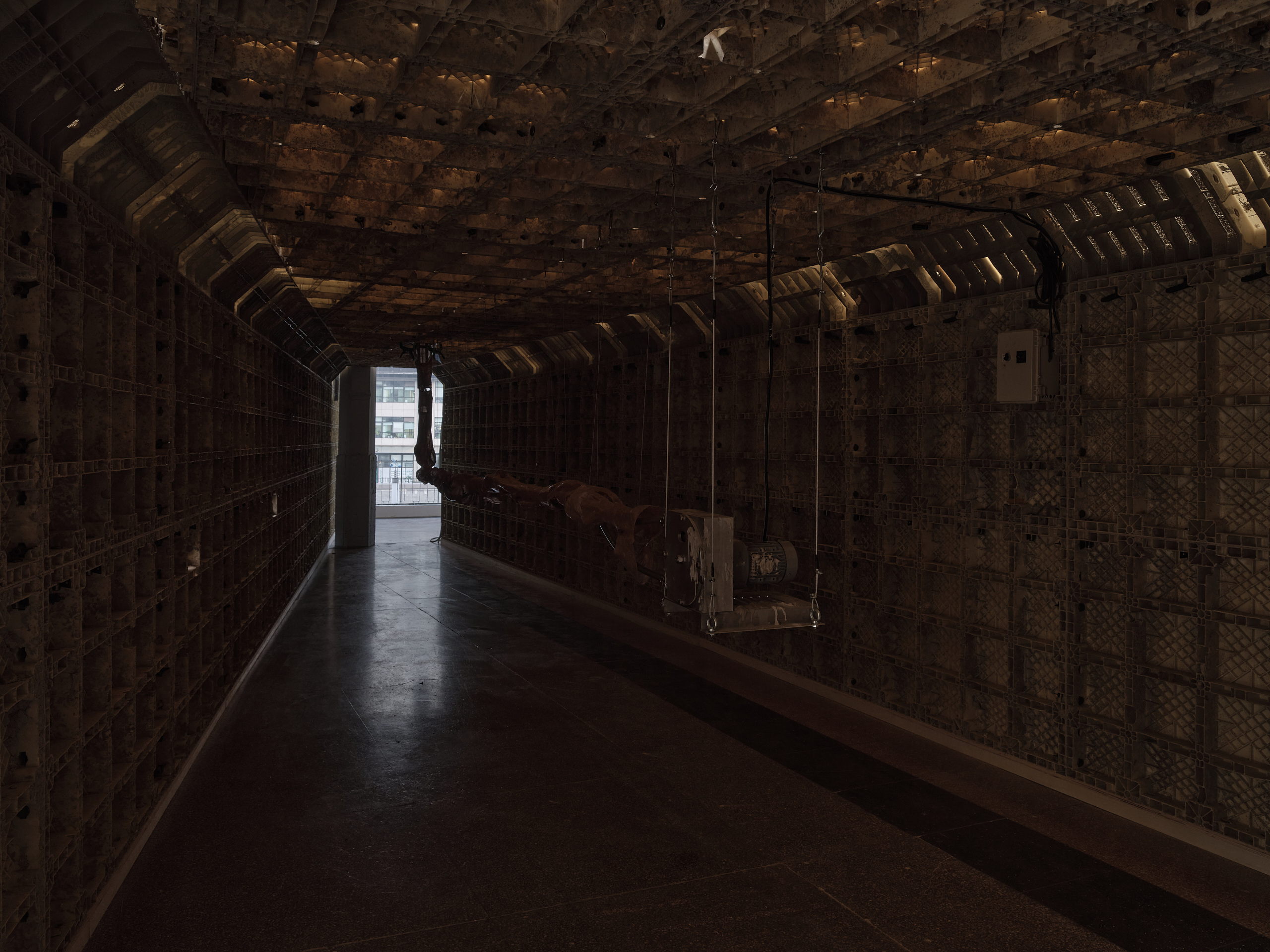
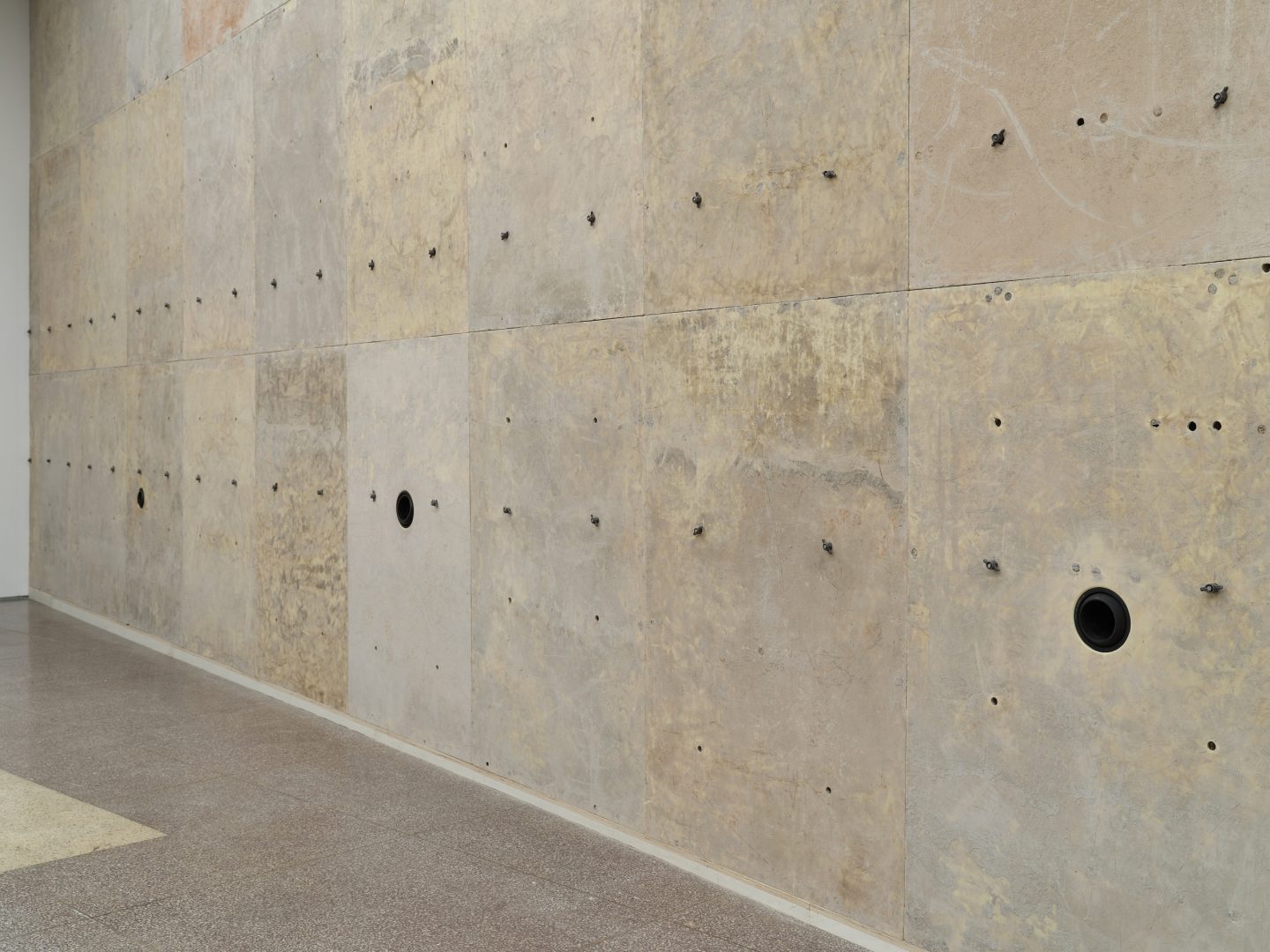
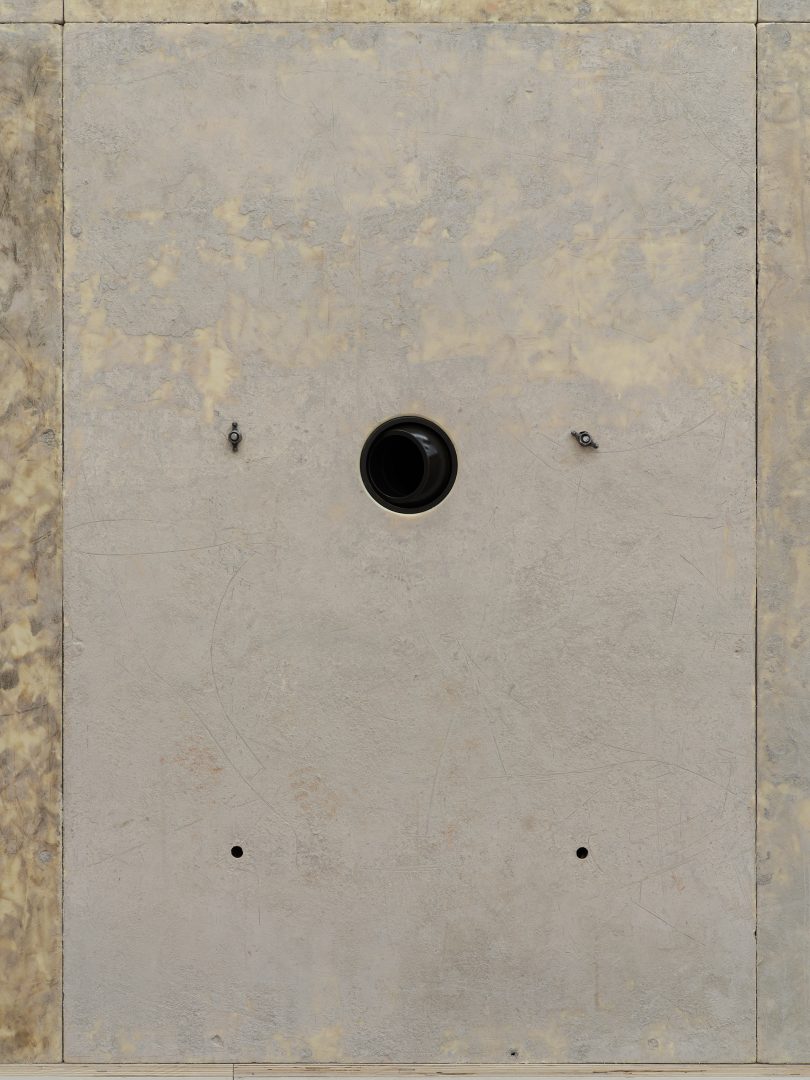
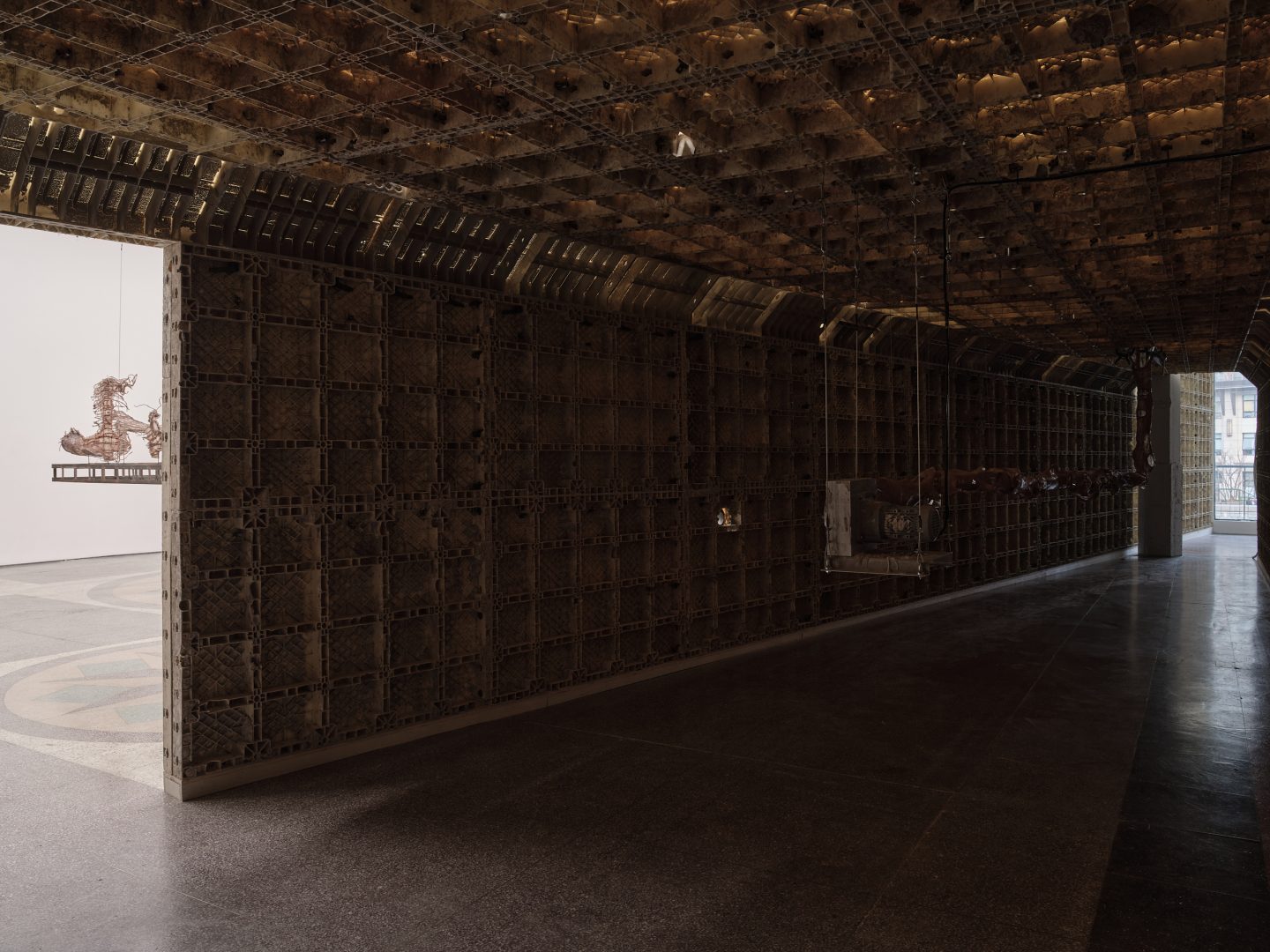
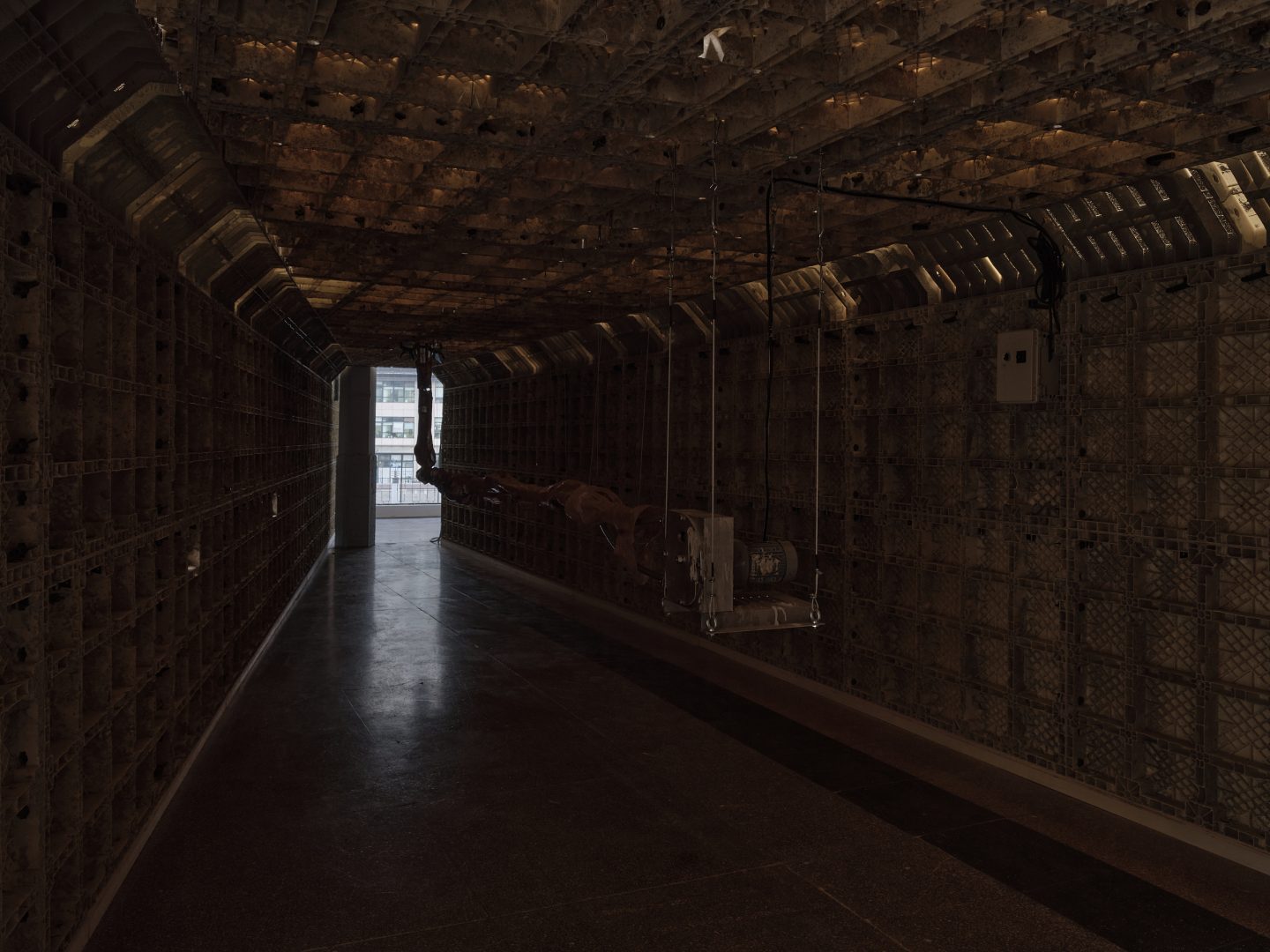
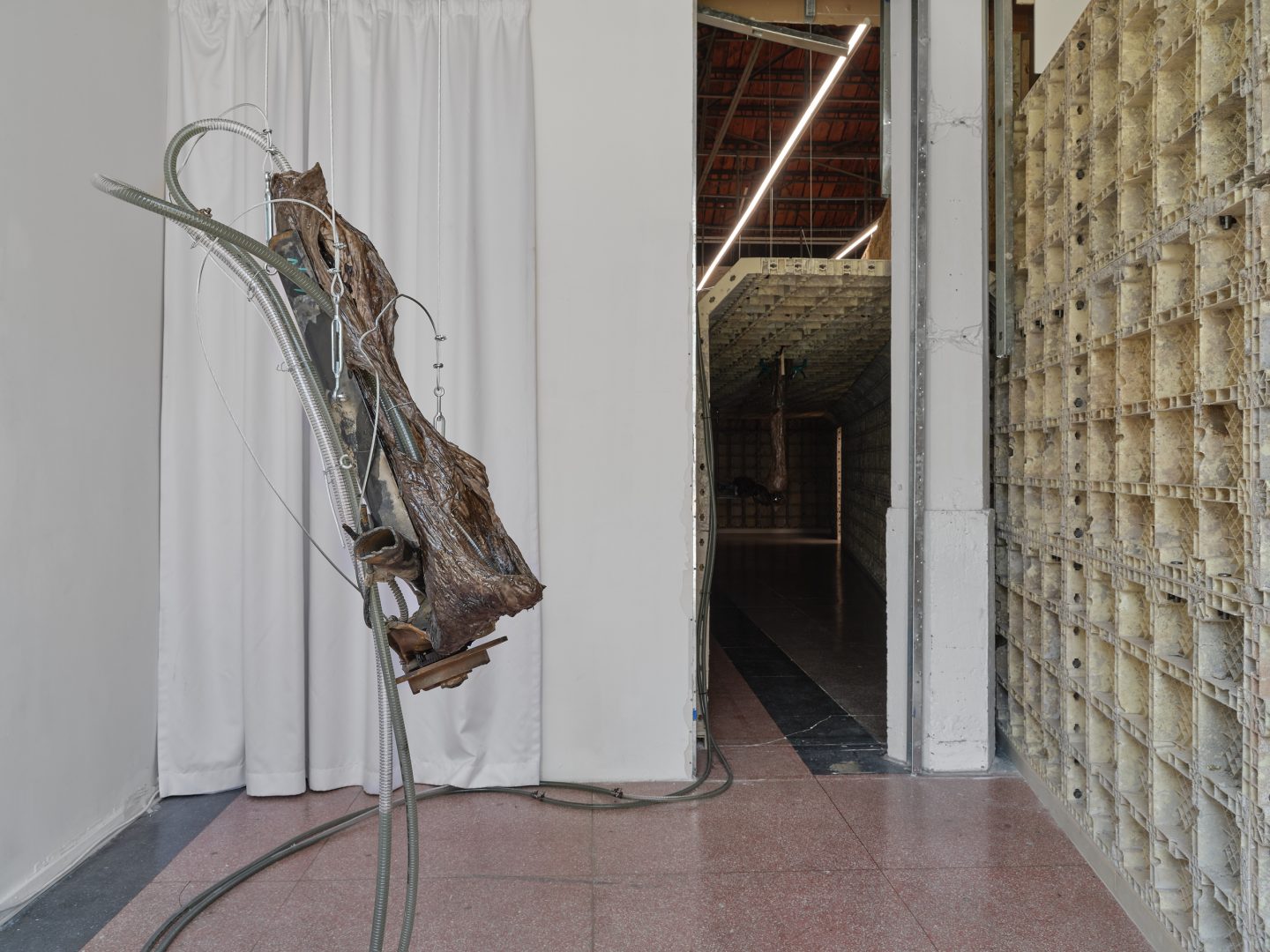
Antenna Space is honored to present Mire Lee’s solo exhibition Openings, featuring three groups of suspended sculptural installations. The artist employs industrial materials, mechanical bearings, and components to dissect the metabolic interior of body, technology, and the city, crafting raw, sensuously charged visual spectacles. The exhibition’s partition walls are built from second-hand construction formwork panels—temporary molds for pouring concrete, still marked by cement stains and the wear of previous sites.
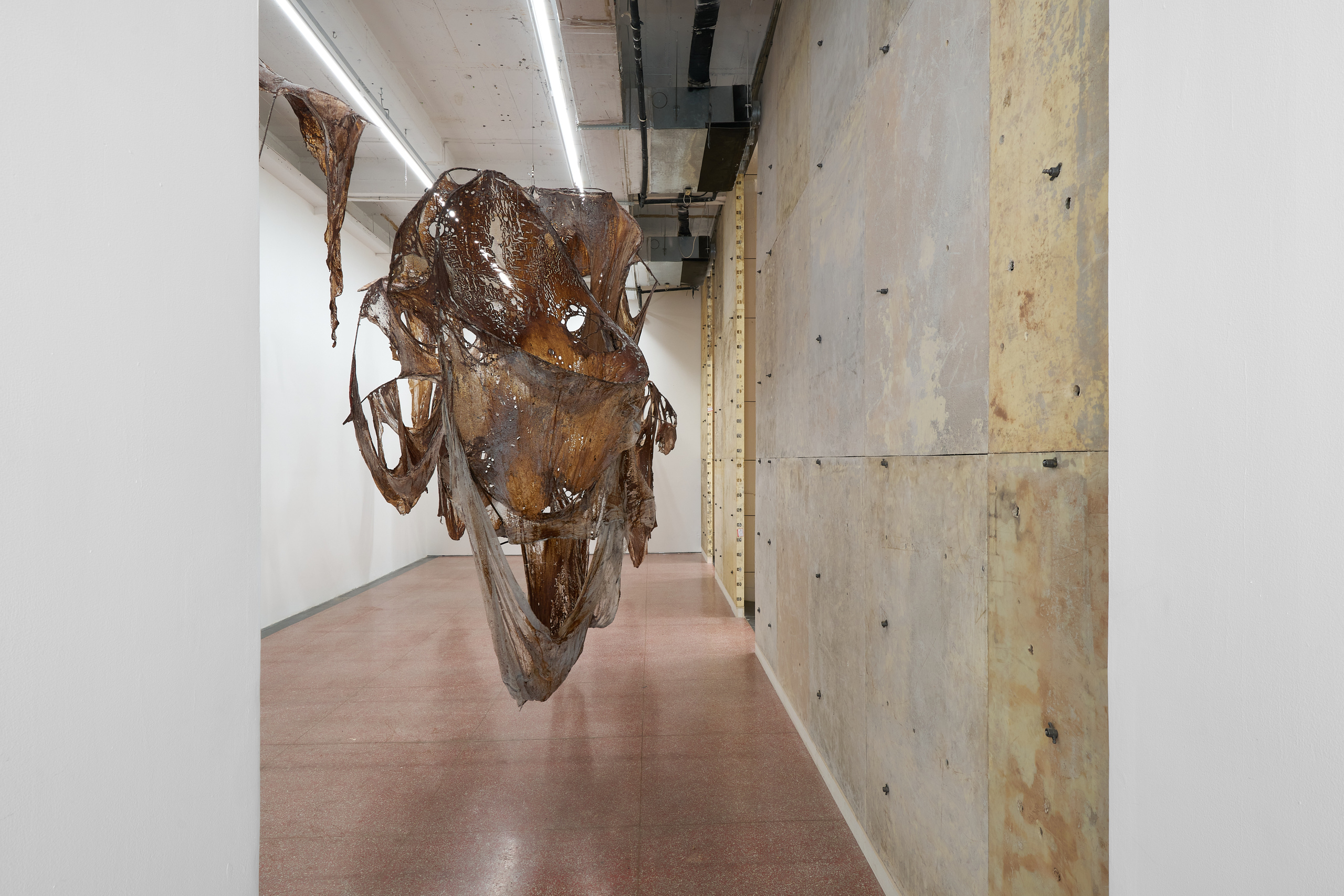
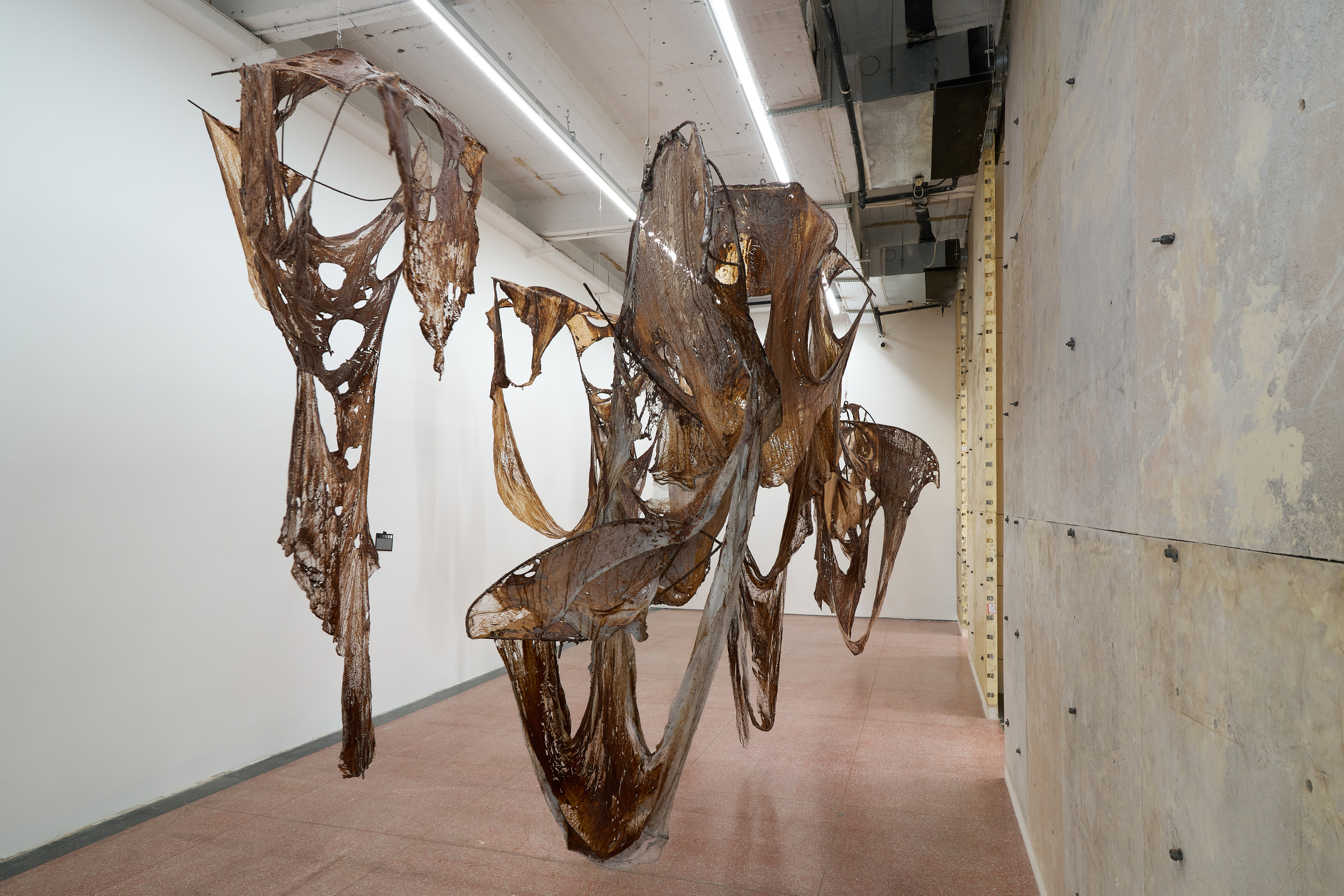
At the exhibition entrance, seven “skin” sculptures— “sloughed off” from the artist’s monumental installation in the Turbine Hall at Tate Modern—are suspended staggered. Alienated laborers, drawn into the maw of automation and mass production, are evoked here; these open wounds persistently display the lacerating pain of flesh consumed and exploited.
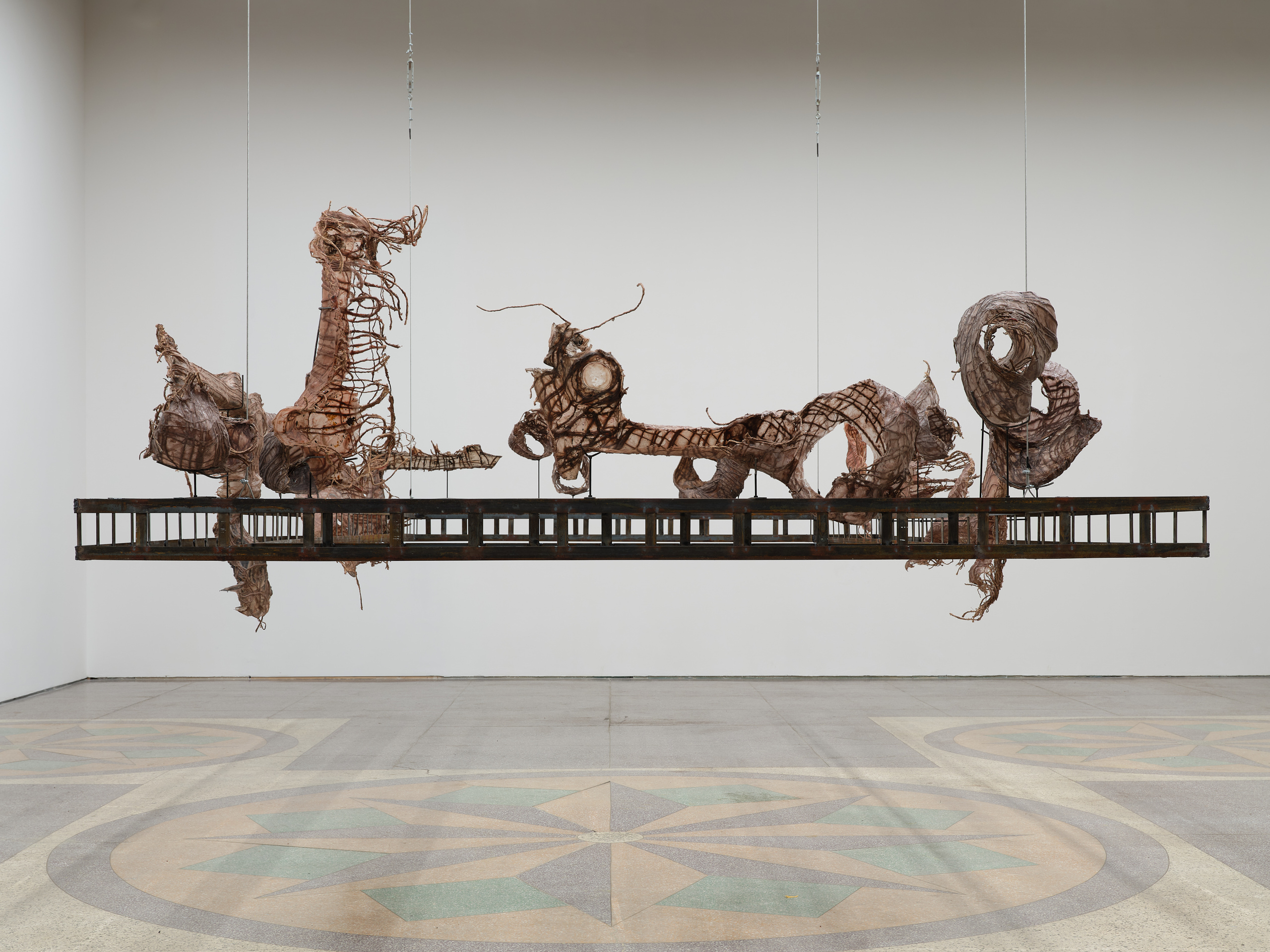
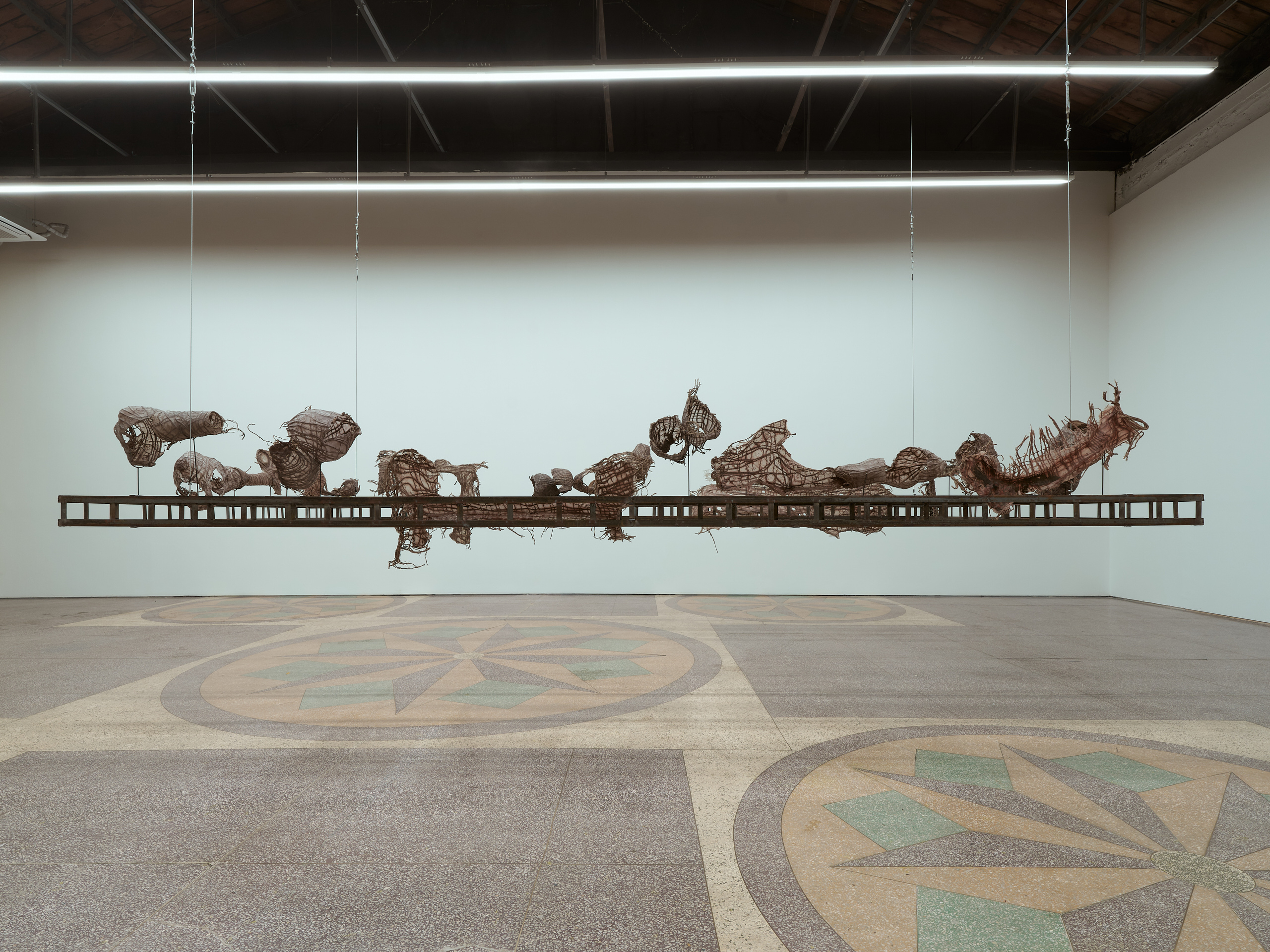
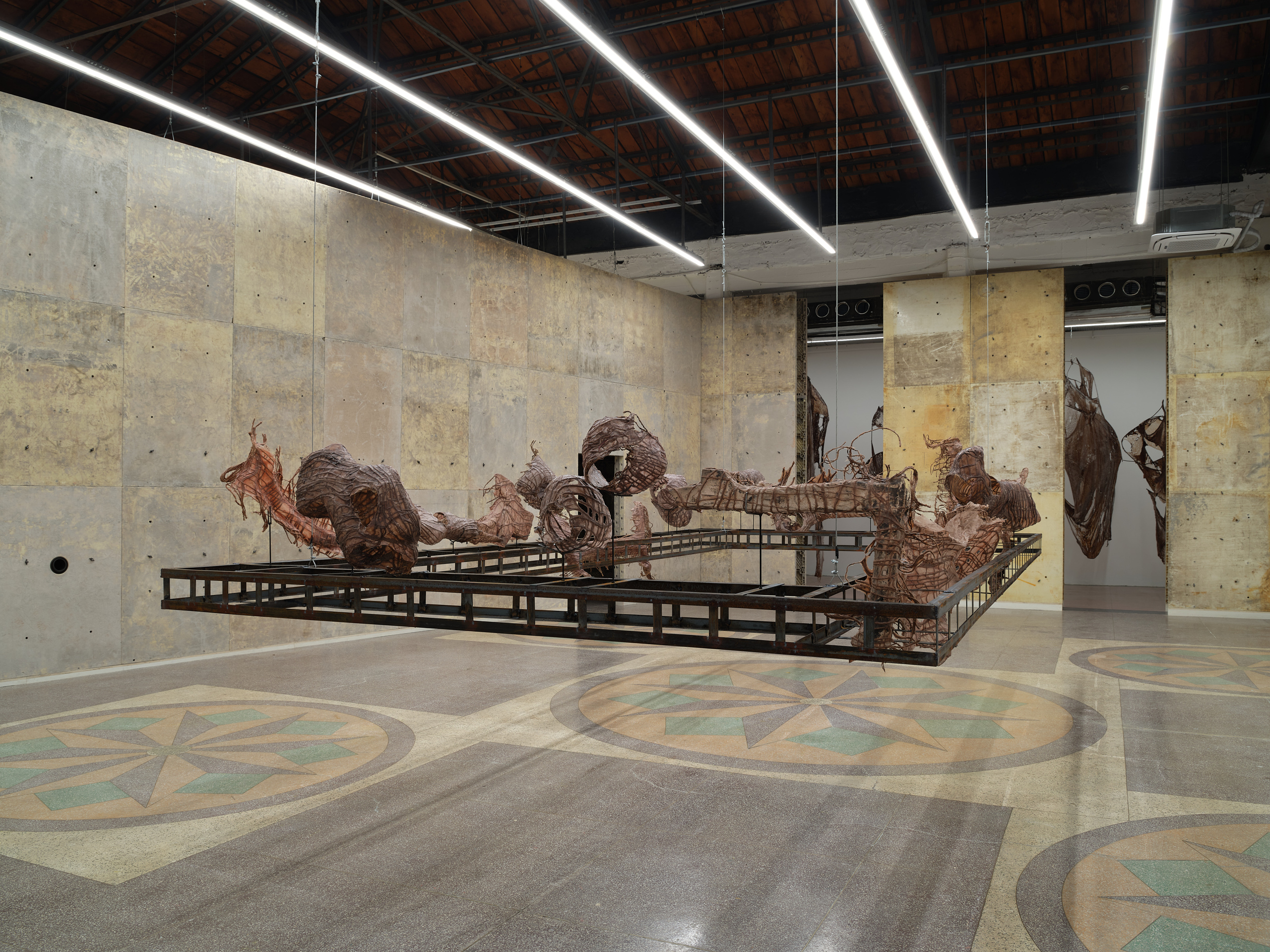
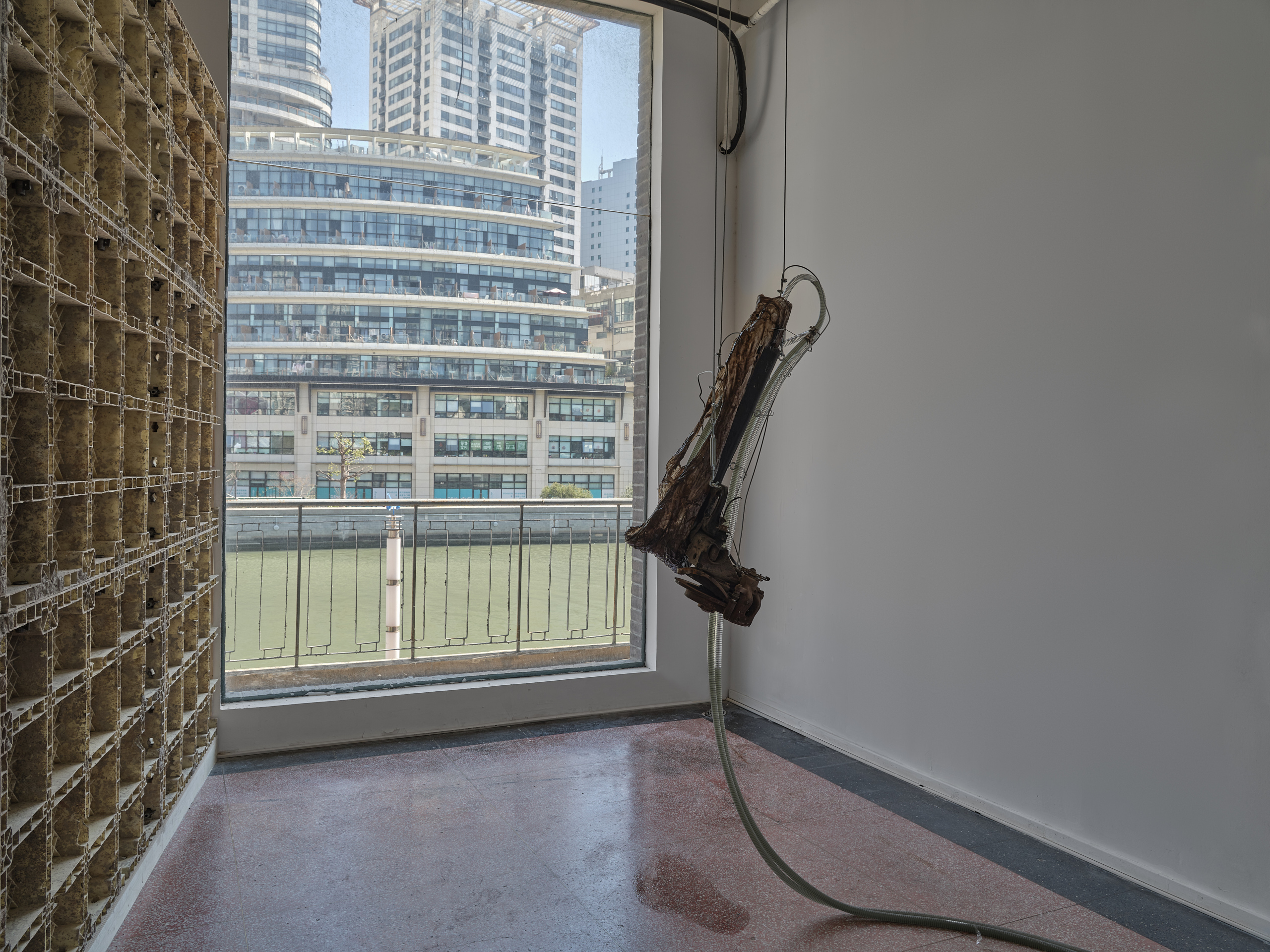
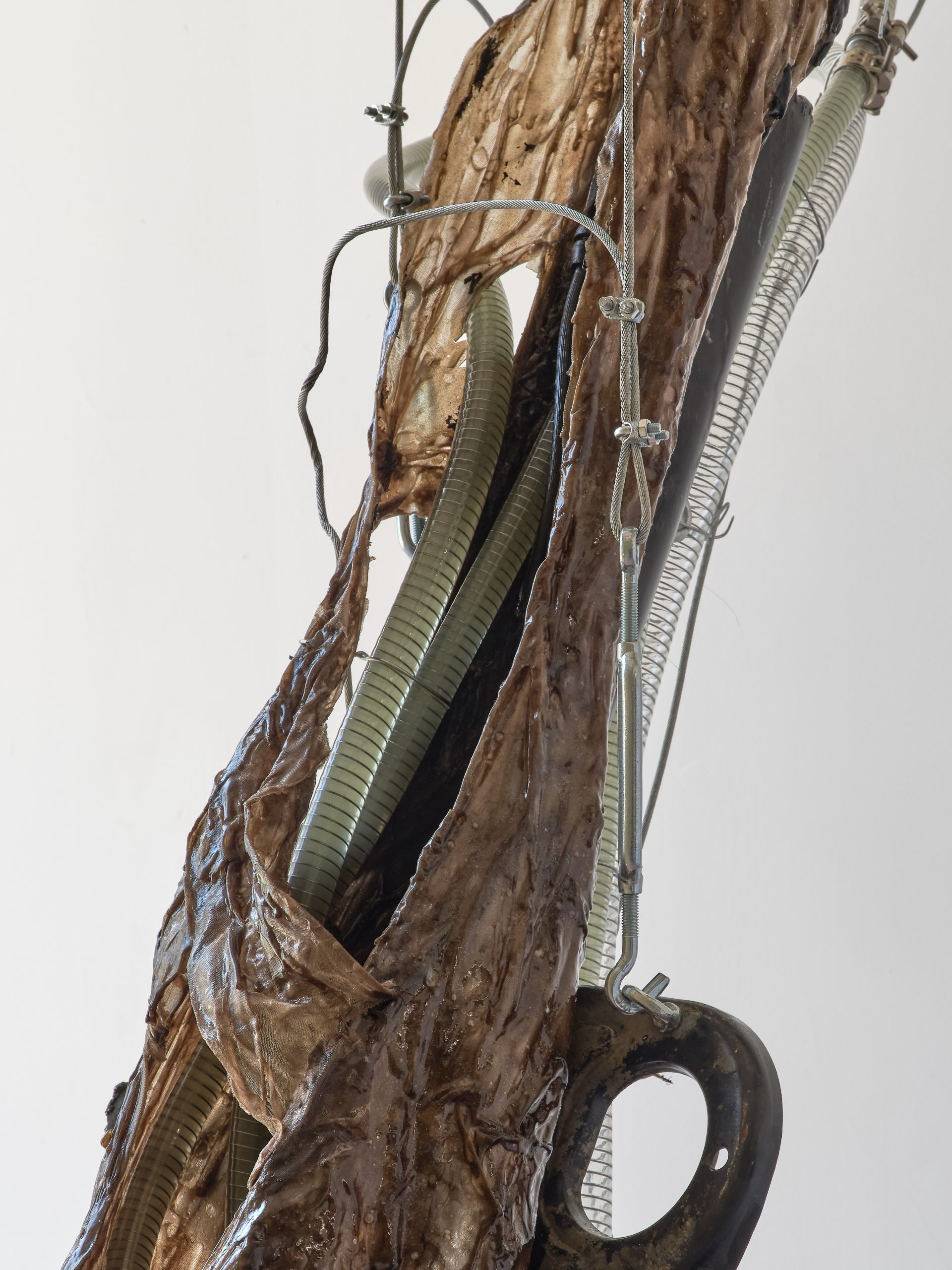
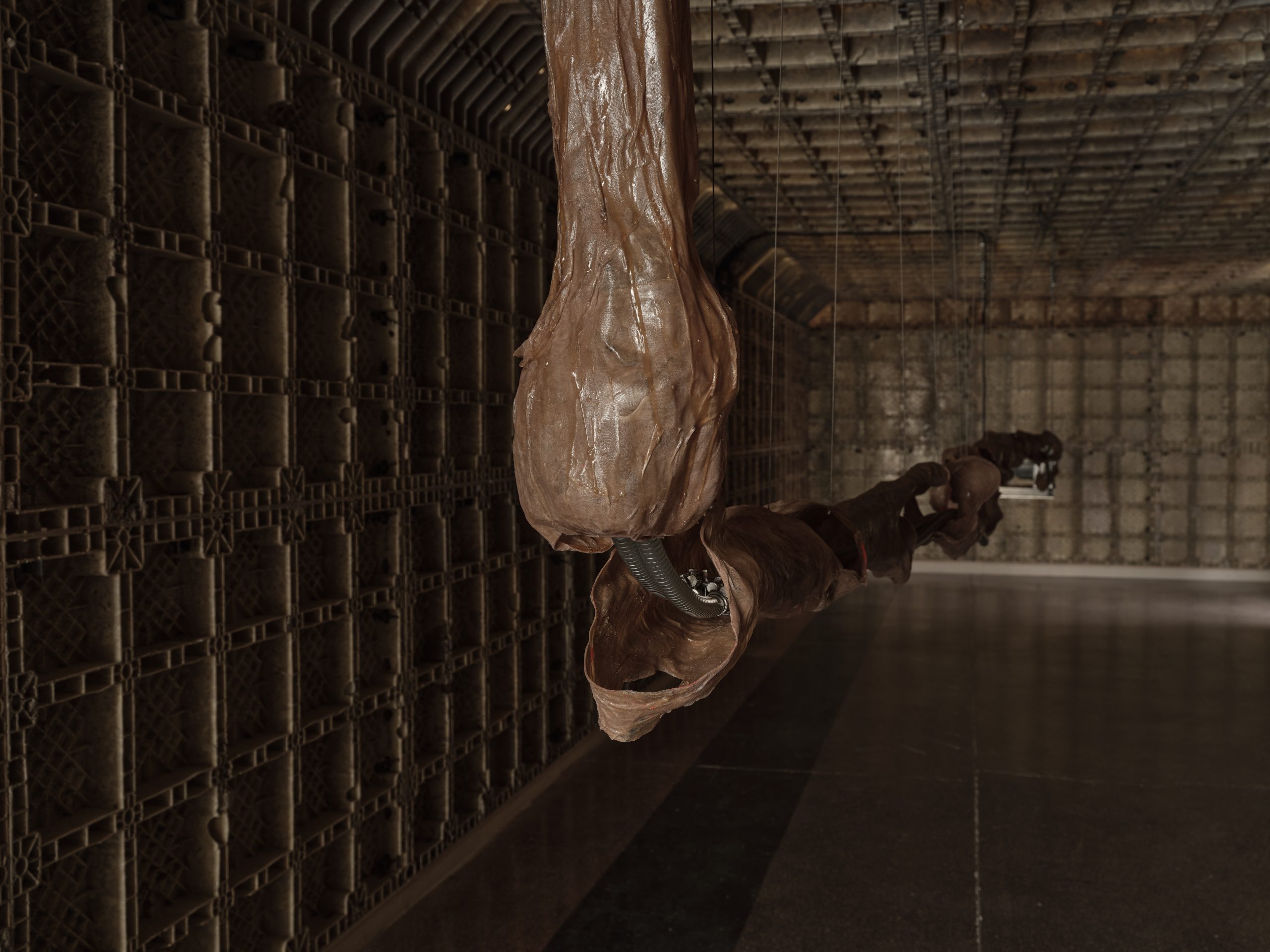
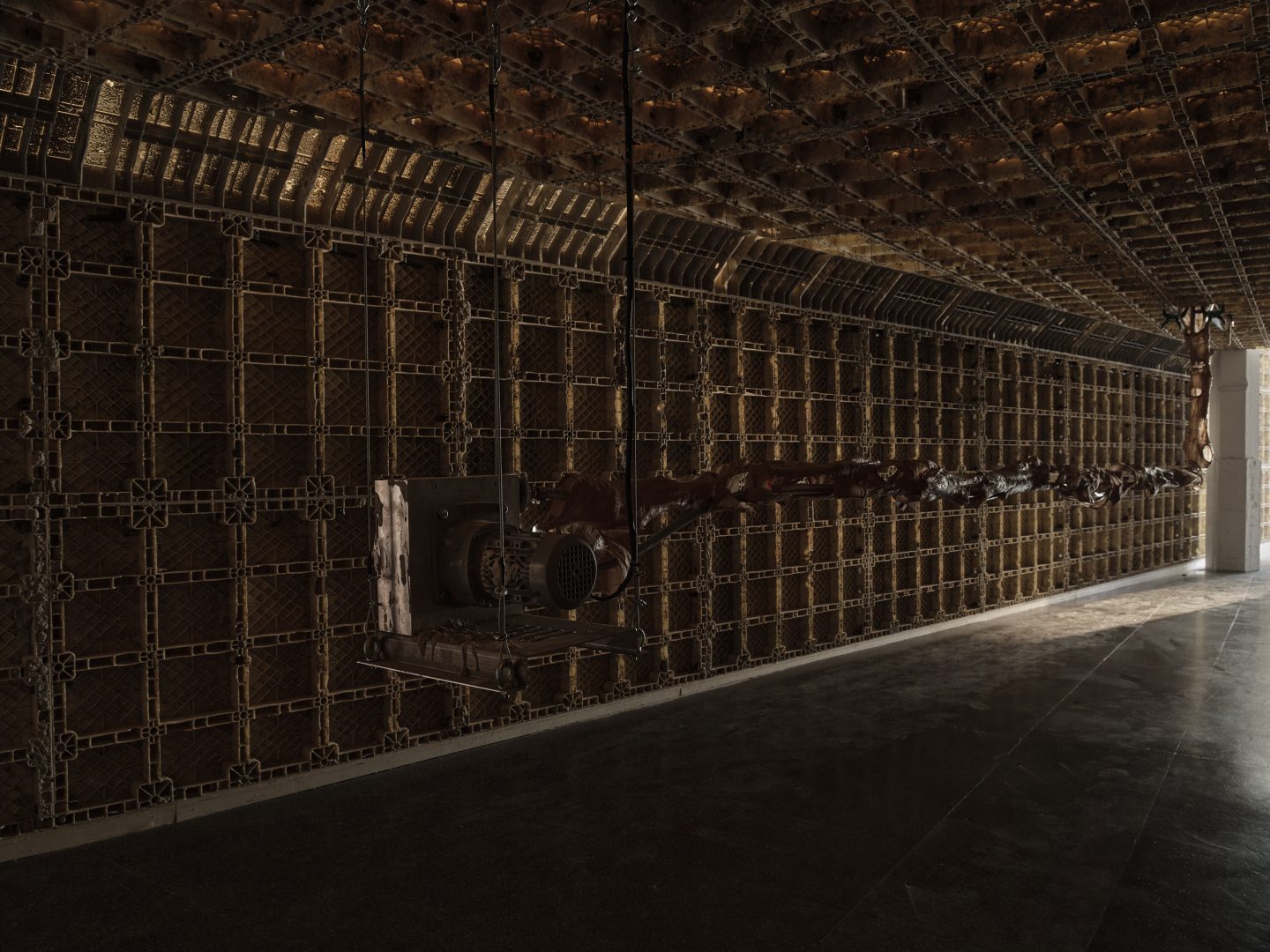
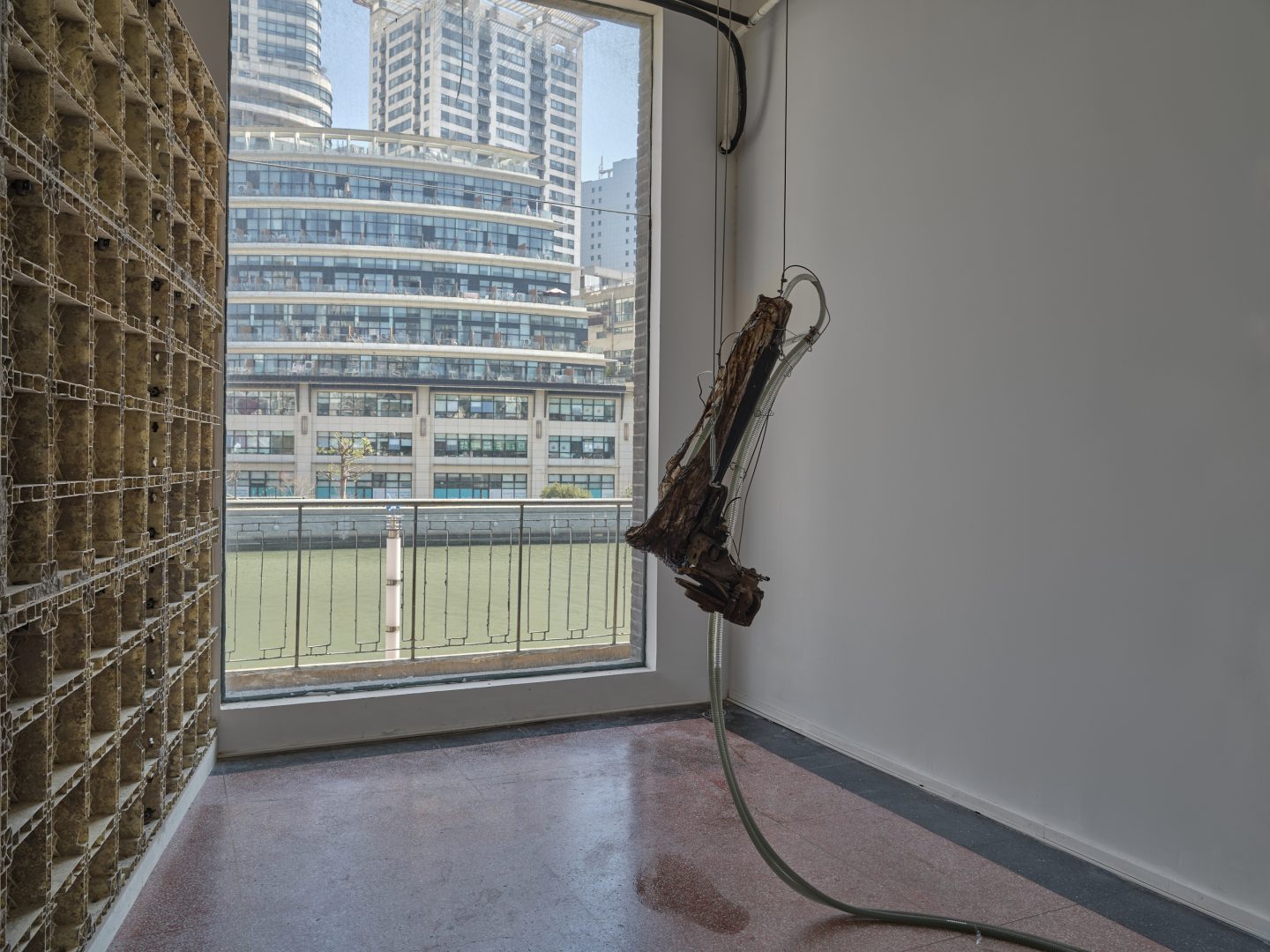
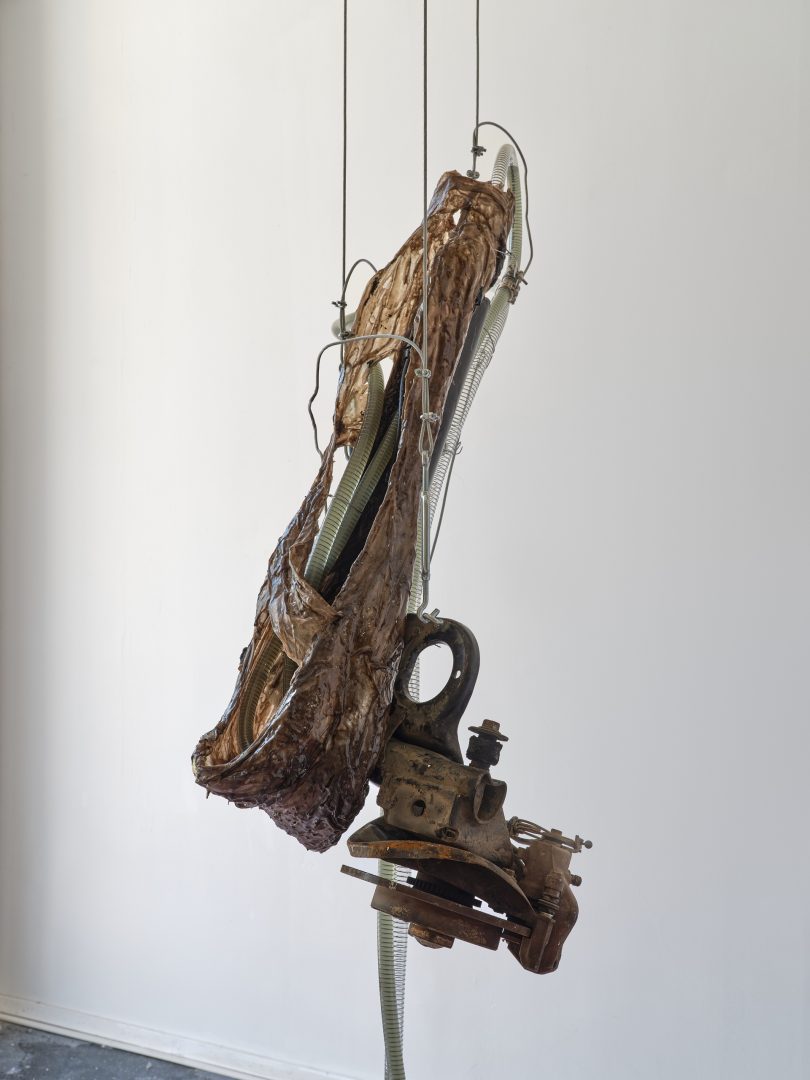
Entering the second chamber, a suspended structure displays a series of “shells” cast from bone glue. Mimicking the biological mechanism of molting, these forms are casts from human torsos and automotive axle housings, coalescing into a pseudo-cityscape model. Across the installation, a tunnel-like space lies prostrate. Three openings on the wall invite viewers to fist through these “anuses,” —apertures fitted with mechanical bearings. Inside the tunnel, PVC hoses are weaved within another set of bone glue sculptures, forming a closed-loop circulatory system that pumps an unidentified green fluid. At the tunnel’s end, through the gallery window, one can glimpse the green river water ubiquitous in Asia’s rapidly industrialized cities—another kind of urban circulation, contaminated by industrial waste.
Confronting Mire Lee’s openings, we are forced to face the sores festering within our rational, controllable urban spaces and industrial systems. On one side is the grand blueprint of progress; on the other, the fragile, suffering flesh—an interior that erupts with the intensity of life yet is utterly exhausted and wasted. The body can never be fully disciplined: in an unguarded moment, it hurls us back to our most primal physical experience—repeatedly penetrated and consumed by desire, where the brilliant luster of aspiration is forever laced with the urge toward self-destruction and an unassimilable filth.
A wound is where the human is born. Only through the opening of a wound can one confront the violence called the “Other” and escape the prison of the “I.” Georges Bataille writes: “Liberate me from myself. I want to cease to be myself.”[2] A self that has been nothing but itself, for too long, is merely a corpse.
If death is evil, life must be something worse than evil. At an extreme pitch, good and evil, sacred and profane, utility and waste, production and excess cease to differ. The gap between these oppositions is felt as a fall, something like a small suicide. Life ceases to console and becomes an absolute force of negation. It grants neither reward nor a way out. Instead, at the cost of letting go of the “I,” the subject gains sovereignty—cursed, however glorious. To experience the sacred beyond the “I”, while still inhabiting a body destined to rot, the subject must undergo an extreme rupture, one that severs the chain of the “I.” In other words, a violence that cuts through the reproduction of continuity.
To take in a death-like violence that tears the “I” apart and births it again, one must remain open—flesh raw and endlessly exposed—something anything but easy. However gently one might phrase it, it borders on the impossible… and yet it is a great feat, even “the supreme pleasure.”[3] “Our only real pleasure is to squander our resources to no purpose, just as if a wound were bleeding away inside us…”[4] The “challenge to death,”[5] which far exceeds the modest measure of the human animal, places the human body—base material like shit, perhaps in some sense even worse—on the same plane as God. Or rather, the reverse: “God is sacred only insofar as he shares the same base foundation as shit.”[6] God is in shit. If not there, then nowhere.
So long as one thinks together the extremes of God and shit, humanity may escape its drive toward collective self-annihilation. If shit—the very summit of uselessness—shares the same fundamental principle as God, then why not the hole that produces only shit be likened to the sun that bestows upon humanity its “accursed” infinite surplus—a sun, moreover, turned upside down? The anus, which produces nothing but this negative remainder, is already pierced into our body like a black opening….
In a context similar to Bataille’s, Paul B. Preciado seeks, as part of a counter-sexual practice, to eroticize the anus, long recognized only as an organ of excretion. This is an attempt to strike back at the privileged status of the penis and vagina, installed within heterosexual logic as natural and central. Put bluntly, it is an attempt to make those noble organs eat shit. Its claims to political utility aside, it is driven by a bottomless hunger for anti-productivity—the desire to turn everything into shit. The anus—a deep, dark opening everyone carries, swallowing and expelling anything yet producing nothing but minus—meets here with the melancholy of the “black sun,” a connection Lee explored in her exhibition of the same name (Black Sun, 2023, New Museum). Julia Kristeva writes that in the depressive imagination, cannibalism functions as a denial of the Other’s death and loss.[7] Within the depressed’s imaginary reality, the body is nothing more than an empty conduit fitted with a “processing facility,”[8] plagued by chronic hunger. In this sense, Kristeva’s melancholic devours the Other, reducing them to a hardened object, while Preciado’s “anal worker”[9] excretes the “ideal” concept and turns it into shit. What they share is a lack of moderation.
Meanwhile, anal intercourse—and “fisting,” a practice most often associated with male homosexual culture and a motif that surfaces part of the exhibition Openings—has been described by Leo Bersani as an experience of self-shattering, one that makes possible another mode of subjectivity. It is an act that literally tears the receiving subject apart. Sex is nothing if not a violence that dismantles the self.
In this case, an open wound as both a place of pain and passage is hardly a metaphor at all. To “receive” a fist through the anus is to undergo something that might alter the very course of the subject’s life. Fisting becomes a genuine “little death,” a challenge hurled toward death itself. The transgression of self-killing crowns the ‘receiving’ subject with glory. Amid the homophobia of the AIDS crisis, Bersani nevertheless wrote—under the proposition that “the rectum is a grave”[10]—of the ethics of anal sex: an ethic that produces nothing, or rather produces the minus of nothing, that “admits even death.”[11] The Other is death; sex is its rehearsal. This masochistic drift—almost a wish for death—belongs to the model of sexuality demanded of the human animal in its becoming. The sexual animal comes into being only through its own rupture.
Lee has long activated, through her work, the violent expenditure of matter and force. Like the anus, her work too produces “quasi-death.”[12] The grand-guignol convulsions and eruptions of viscera, skeleton, blood, and bodily fluids staged by her mechanical sculptures—the entrails and frames of some colossal animal—operate much like the abject, drawing the subject into the pleasure of boundary loss. The abject refers to something that triggers an immediate recoil of disgust in us as cultural beings—like a warning signal. By merely existing, it relentlessly insults the authority of binary divisions: life and death, inside and outside, and above all the boundary between “I” and “you.” In this sense, the abject returns to the subject as a form of immanent revenge. And yet this return is a great temptation. The abject’s fascination with the primordial “juice,” the one that humanity had to forget in order to become speaking beings, pushes the subject toward a fall. The exhibition Openings hovers at that threshold, suspending almost-bodies at the brink of descent. Once such a descent begins, the subject comes to realize that, unlike ascent, descent knows no limit.
[1] Having followed Lee’s work closely over the years, this text draws on various references to illuminate Lee’s approaches and thinking behind the practice. Written prior to viewing the exhibition, it does not aim to serve as a guide to the physical installation. Readers are kindly asked to bear this in mind.
[2] Georges Bataille, L’Archangélique
[3] Ibid.
[4] Georges Bataille, Eroticism
[5] L’Archangélique
[6] Kim Yeon Hee, Kim Hong Joong, “Aesthetics of the Formless and the Impossible from the Perspective of Georges Bataille”
[7] Julia Kristeva, Black Sun
[8] Paul B. Preciado, Countersexual Manifesto
[9] Ibid.
[10] Leo Bersani, “Is rectum a grave?”
[11] Eroticism
[12] A Korean idiom comes to mind that denounces a ‘useless’ person: “똥 만드는 기계(a shit-making machine)” Strikingly, this description applies to every human being. The challenge, then, is to reintroduce this understanding back into reality.
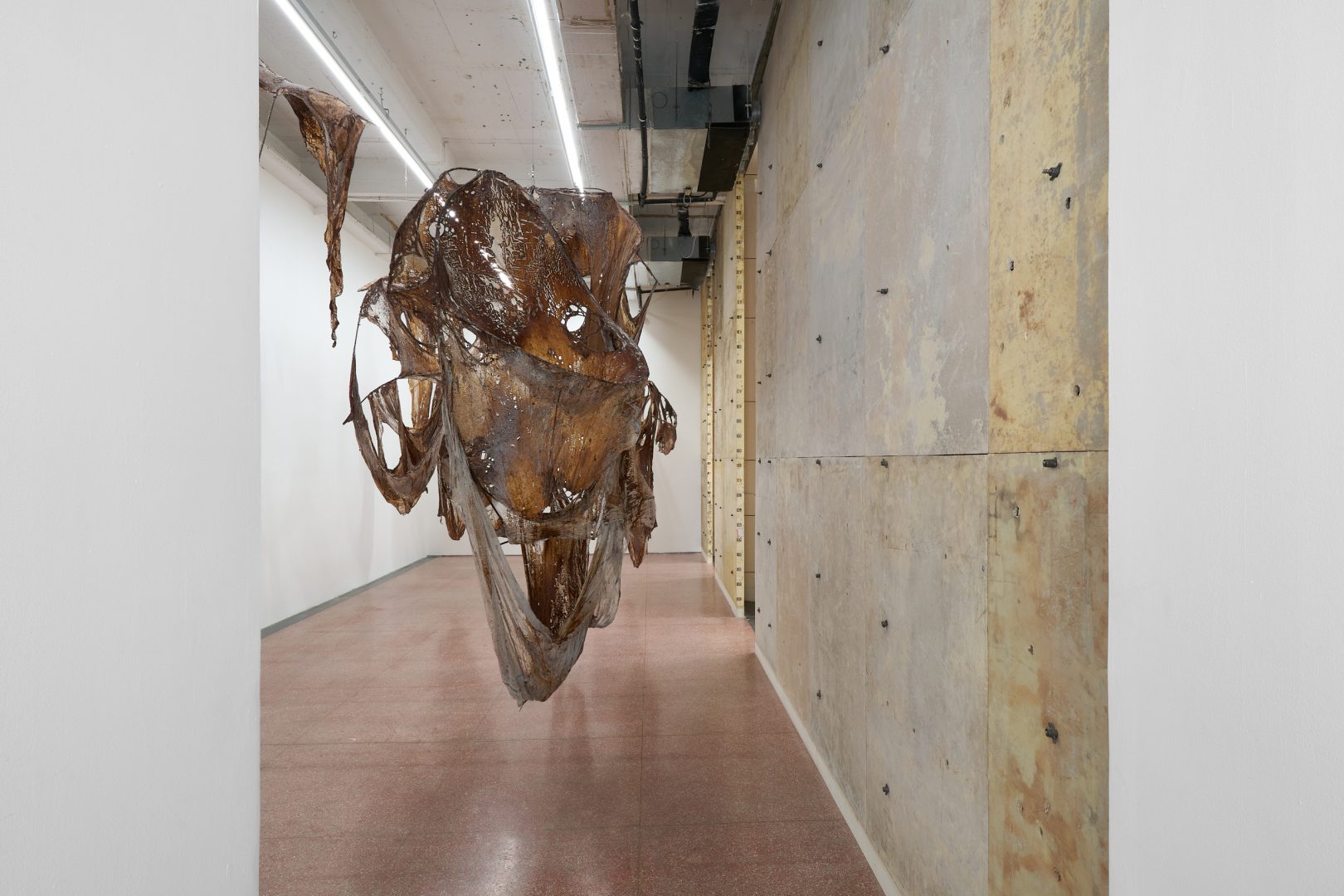
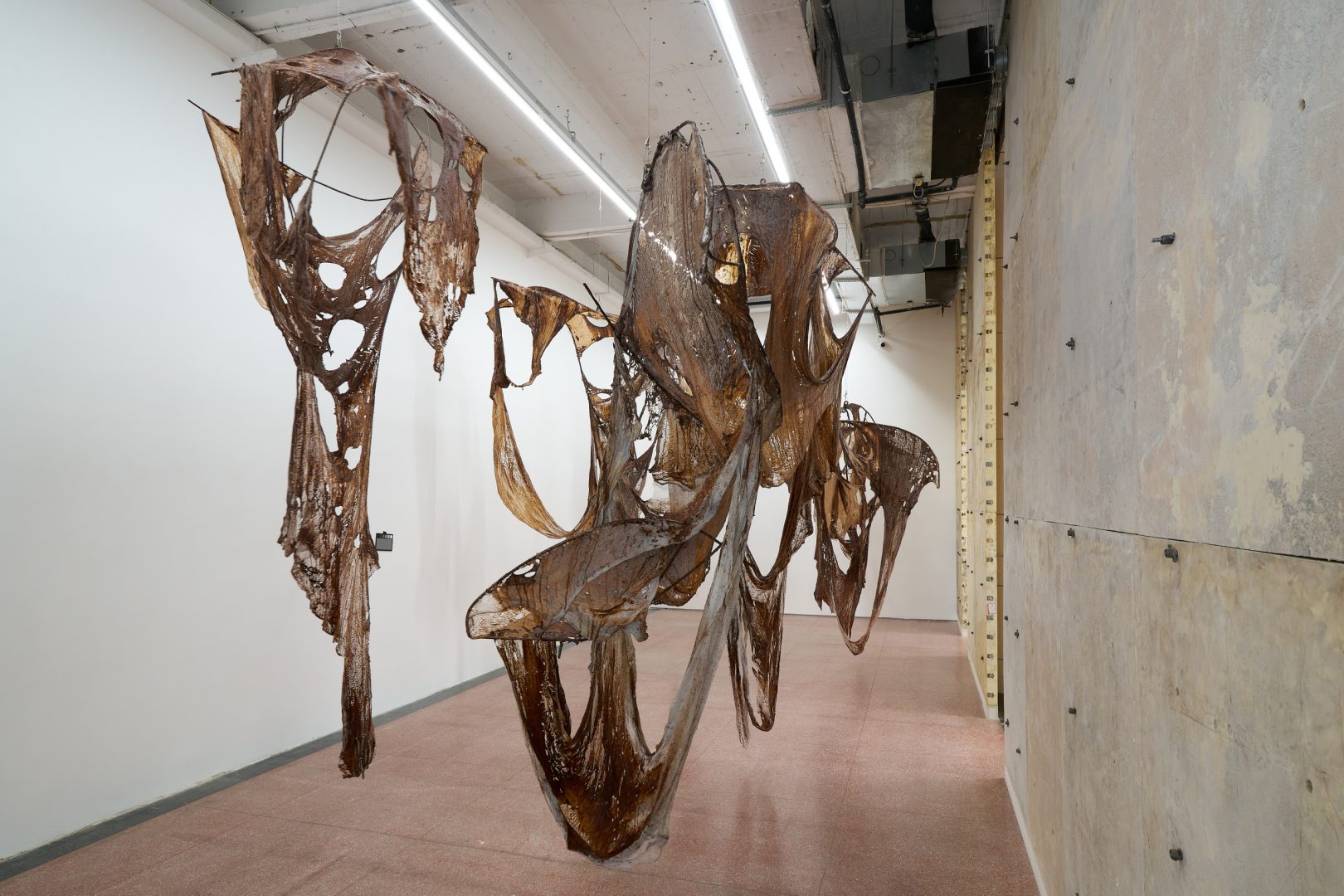
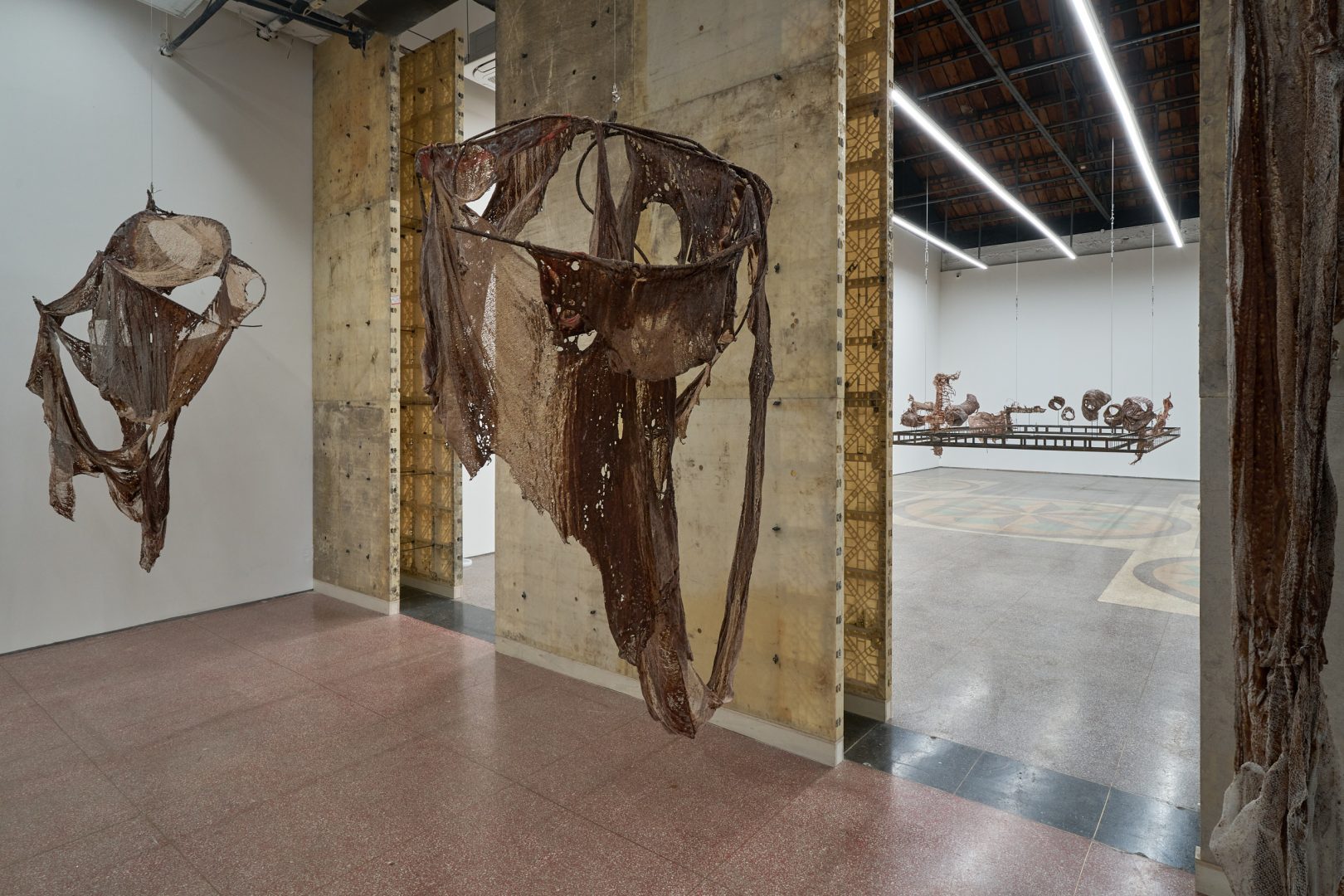
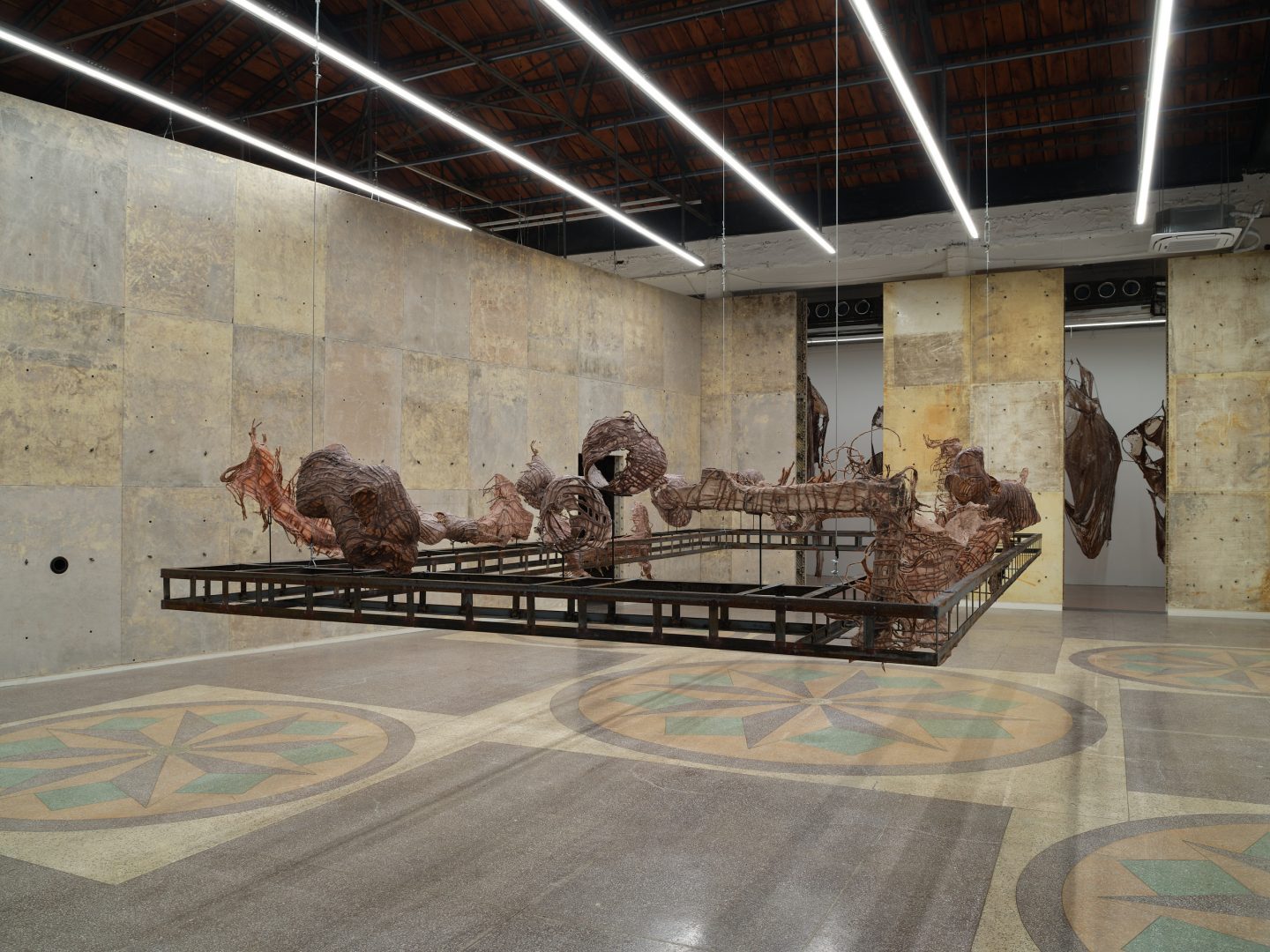
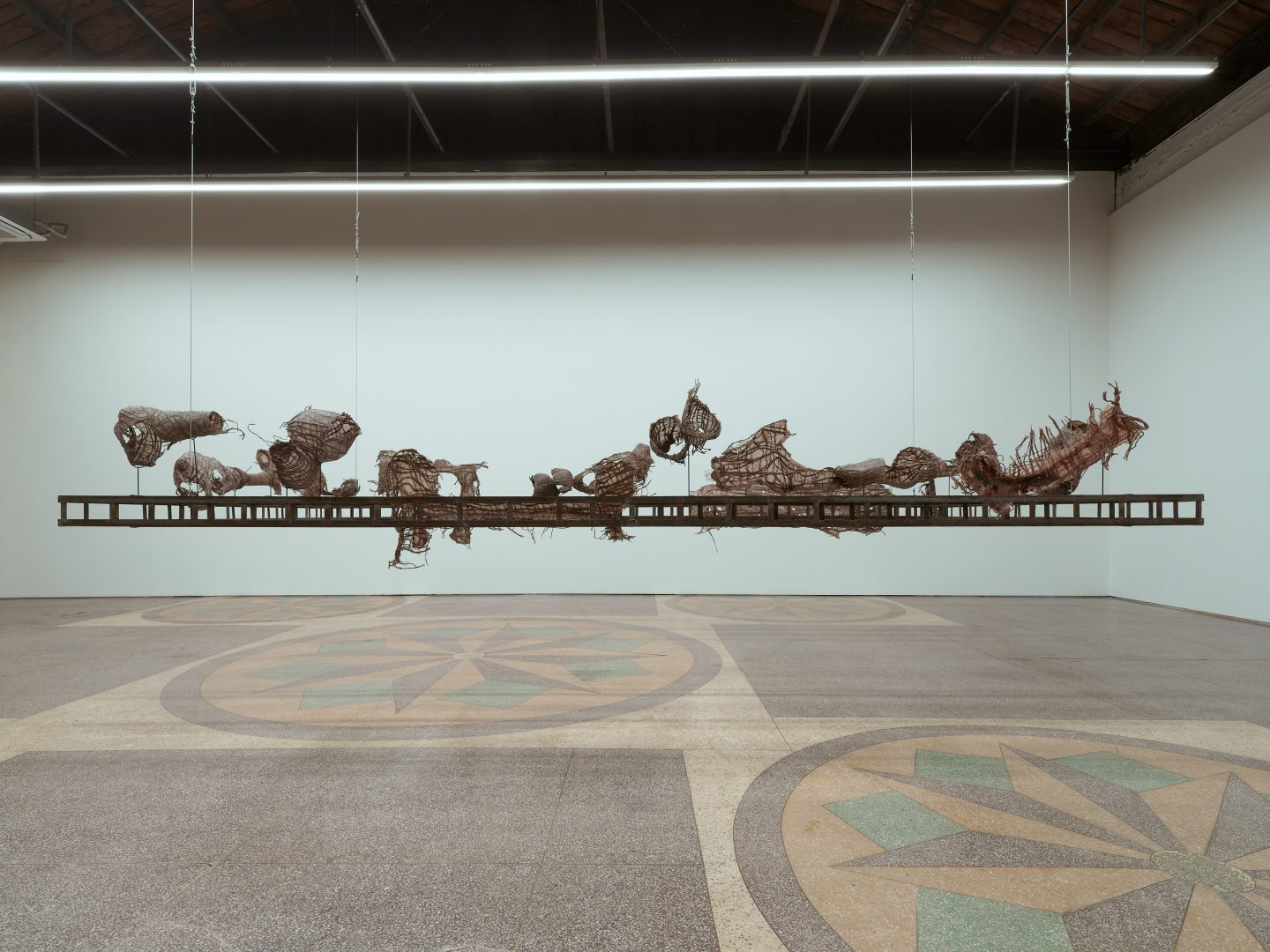
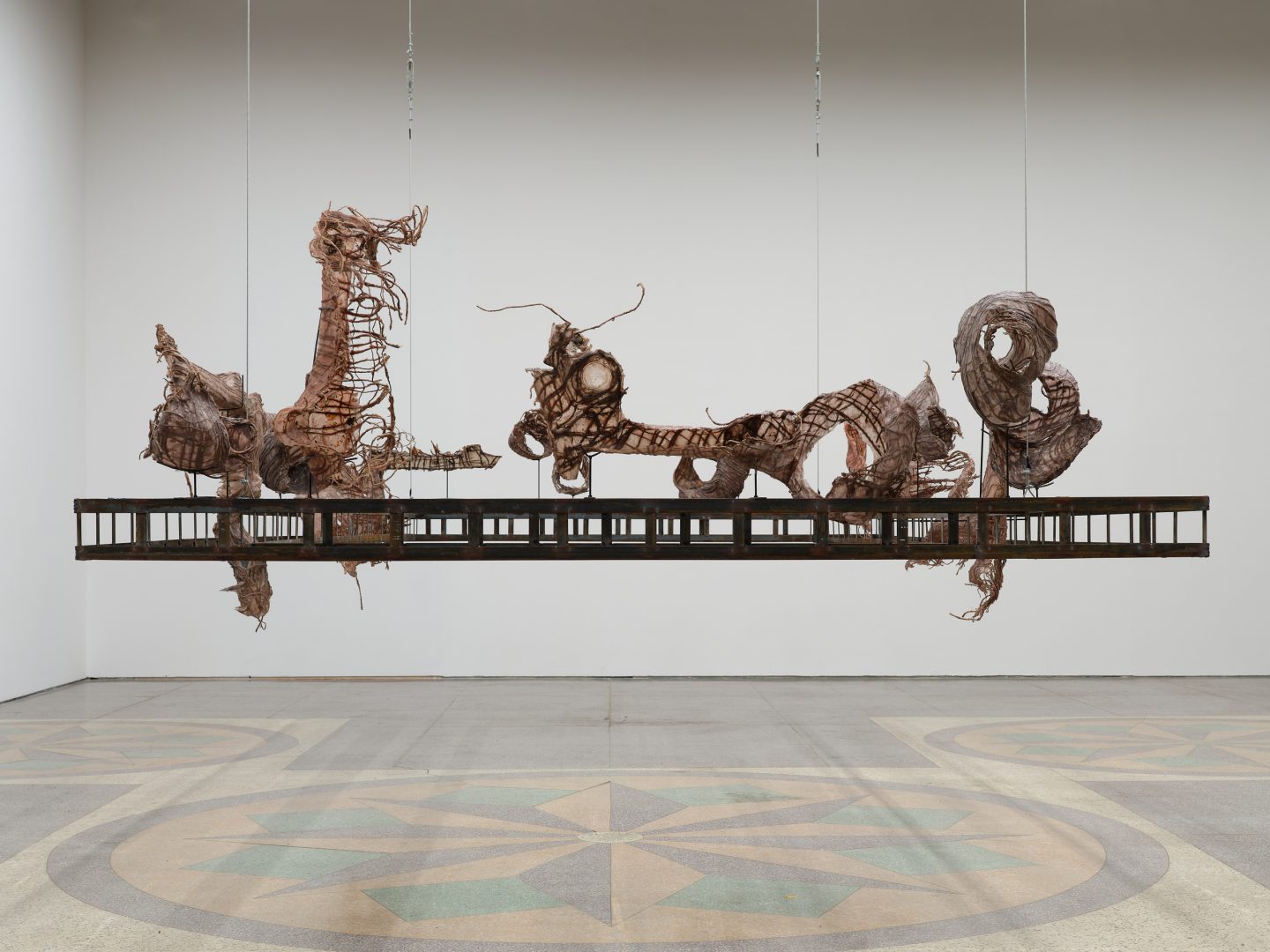
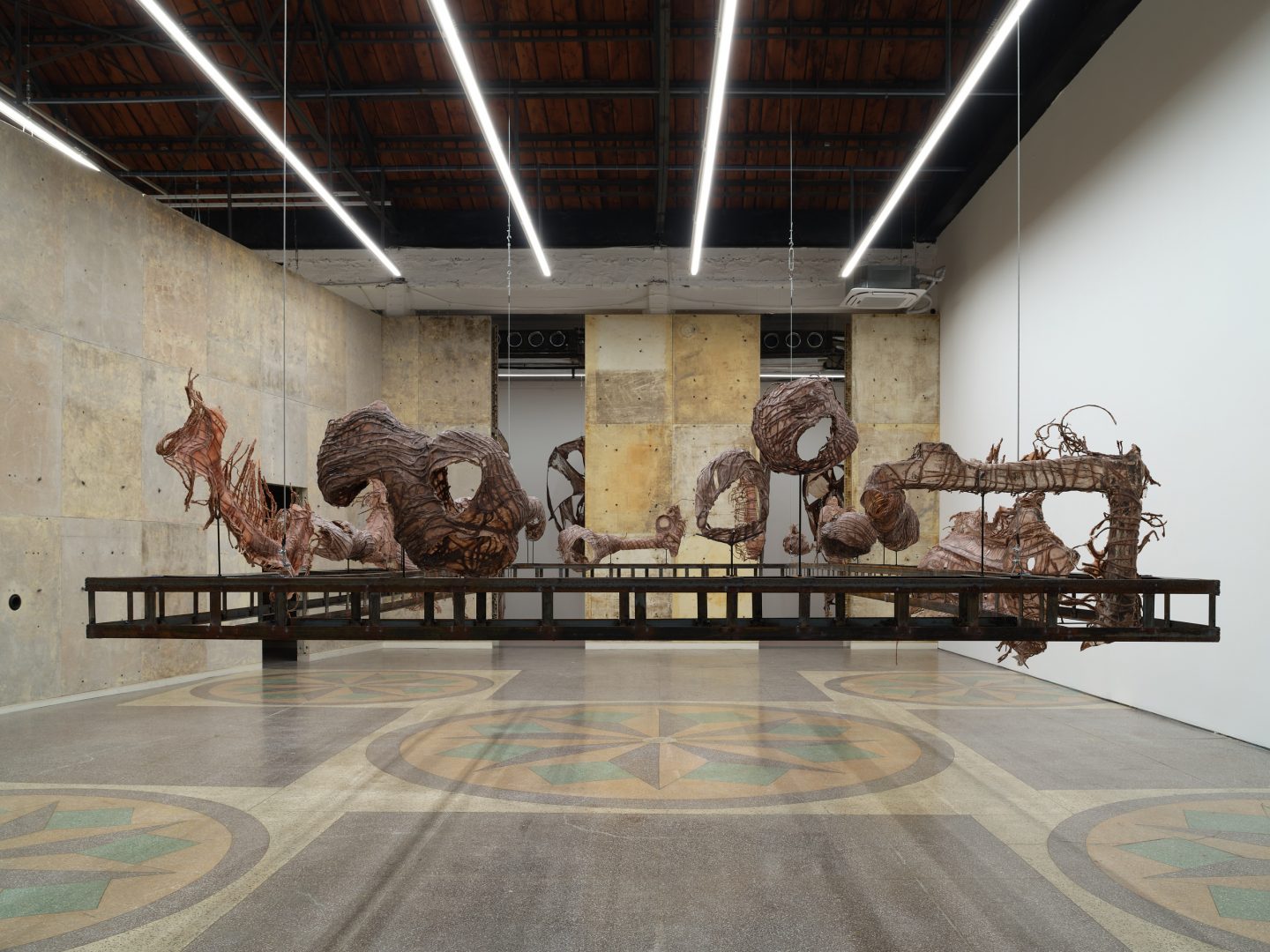
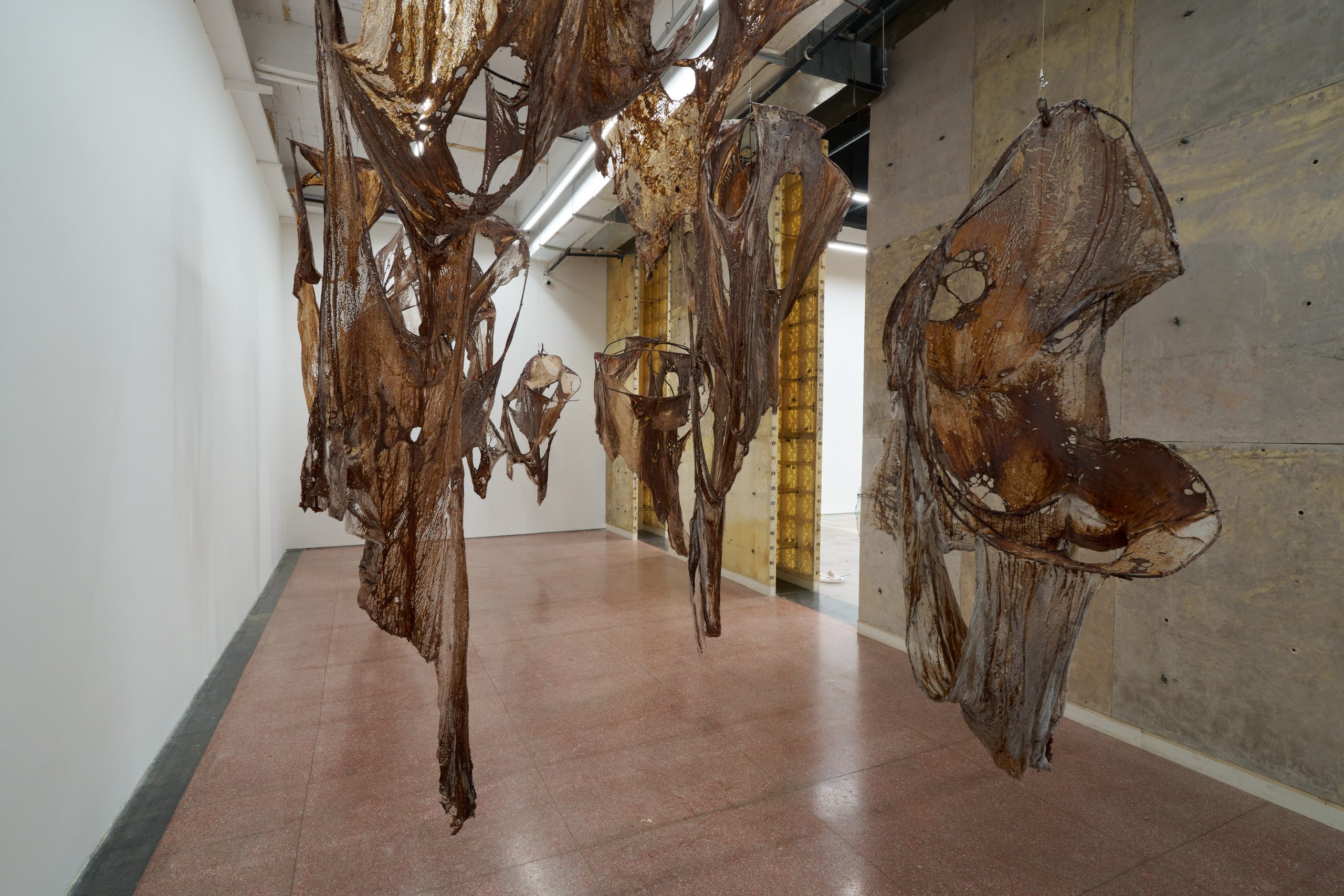
Rebars, pigmented methylcellulose on construction netting
dimensions variable
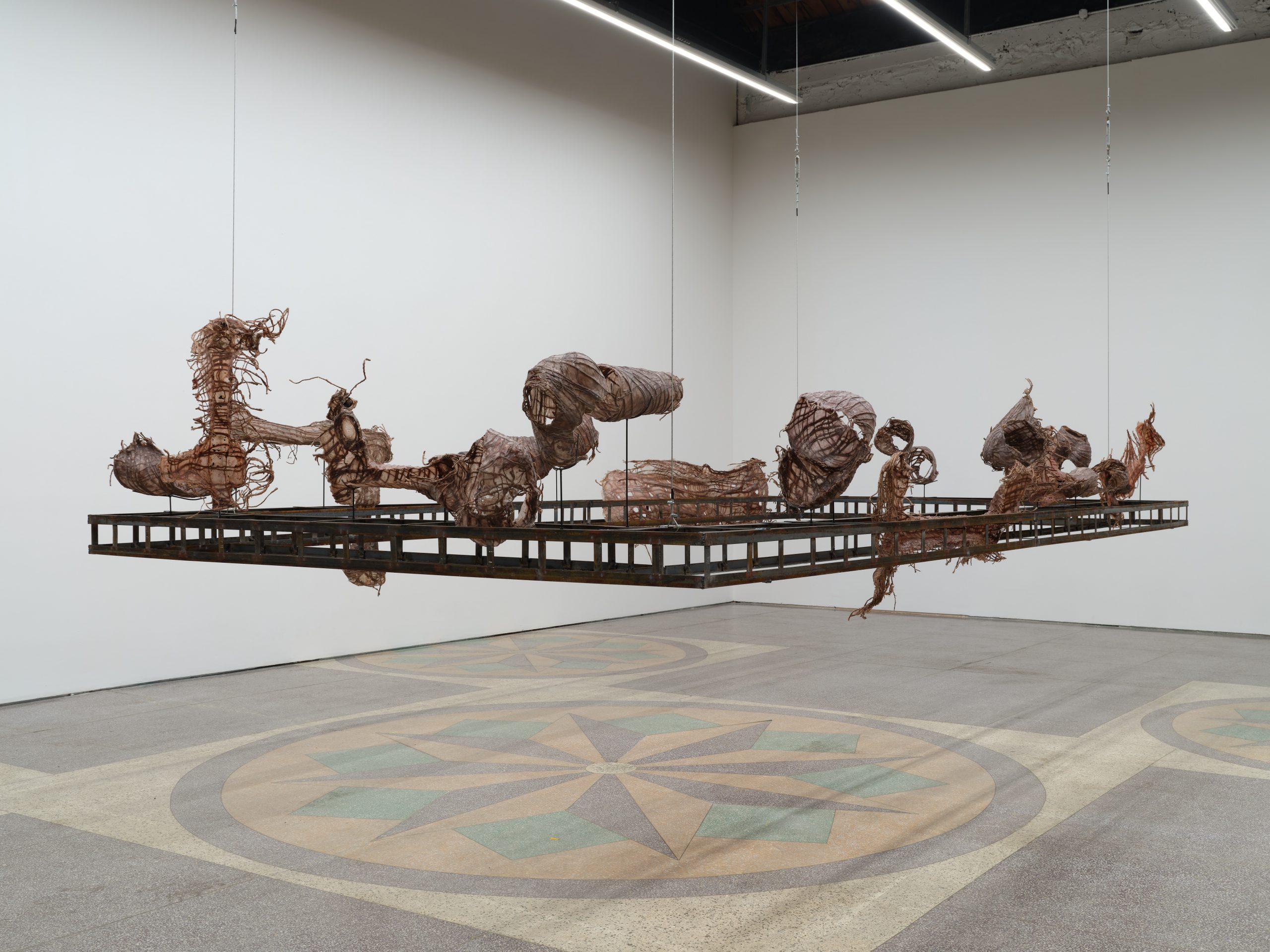
Bone glue, jute, mesh
dimensions variable
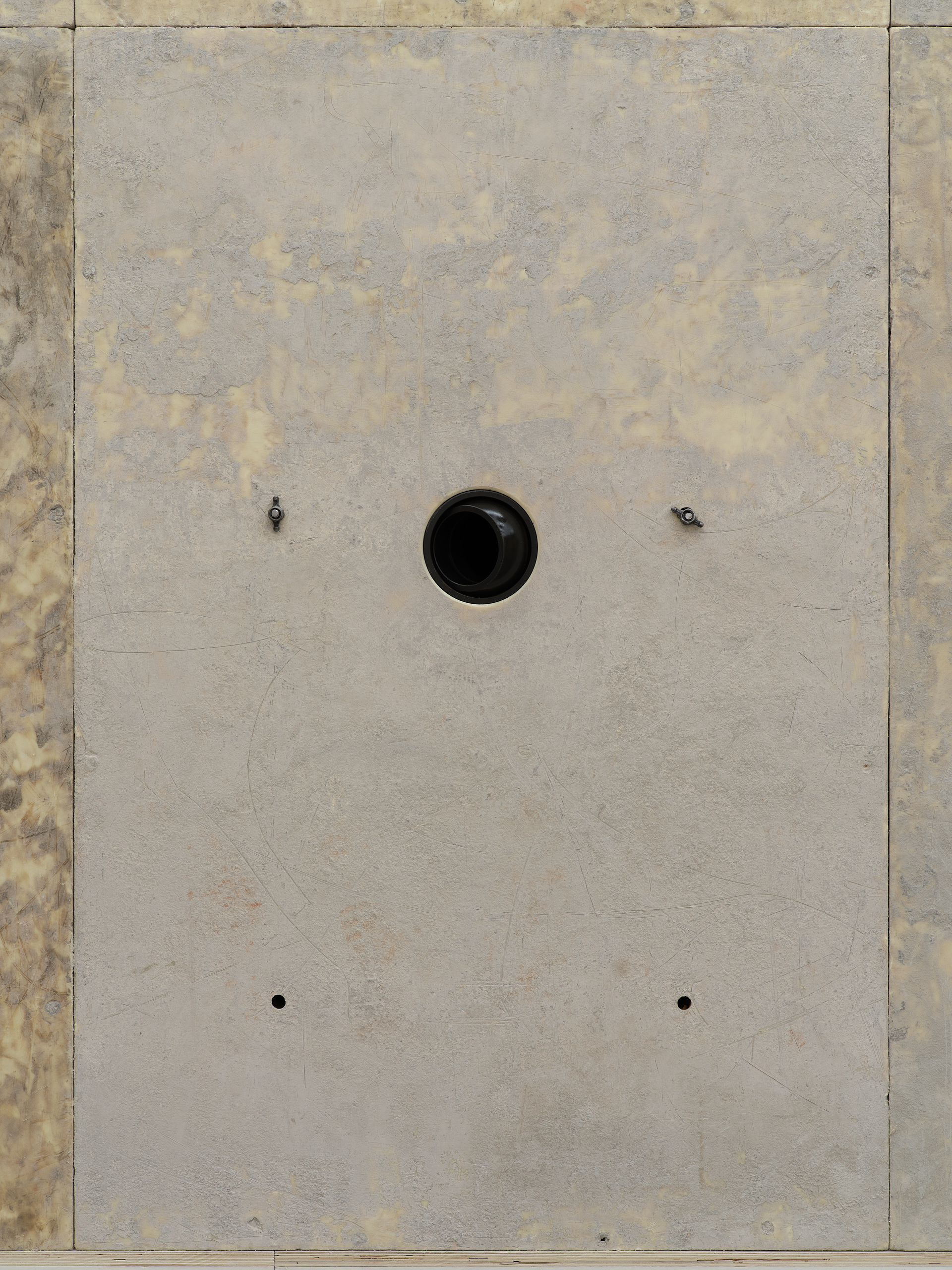
Spherical bearing
dimensions variable
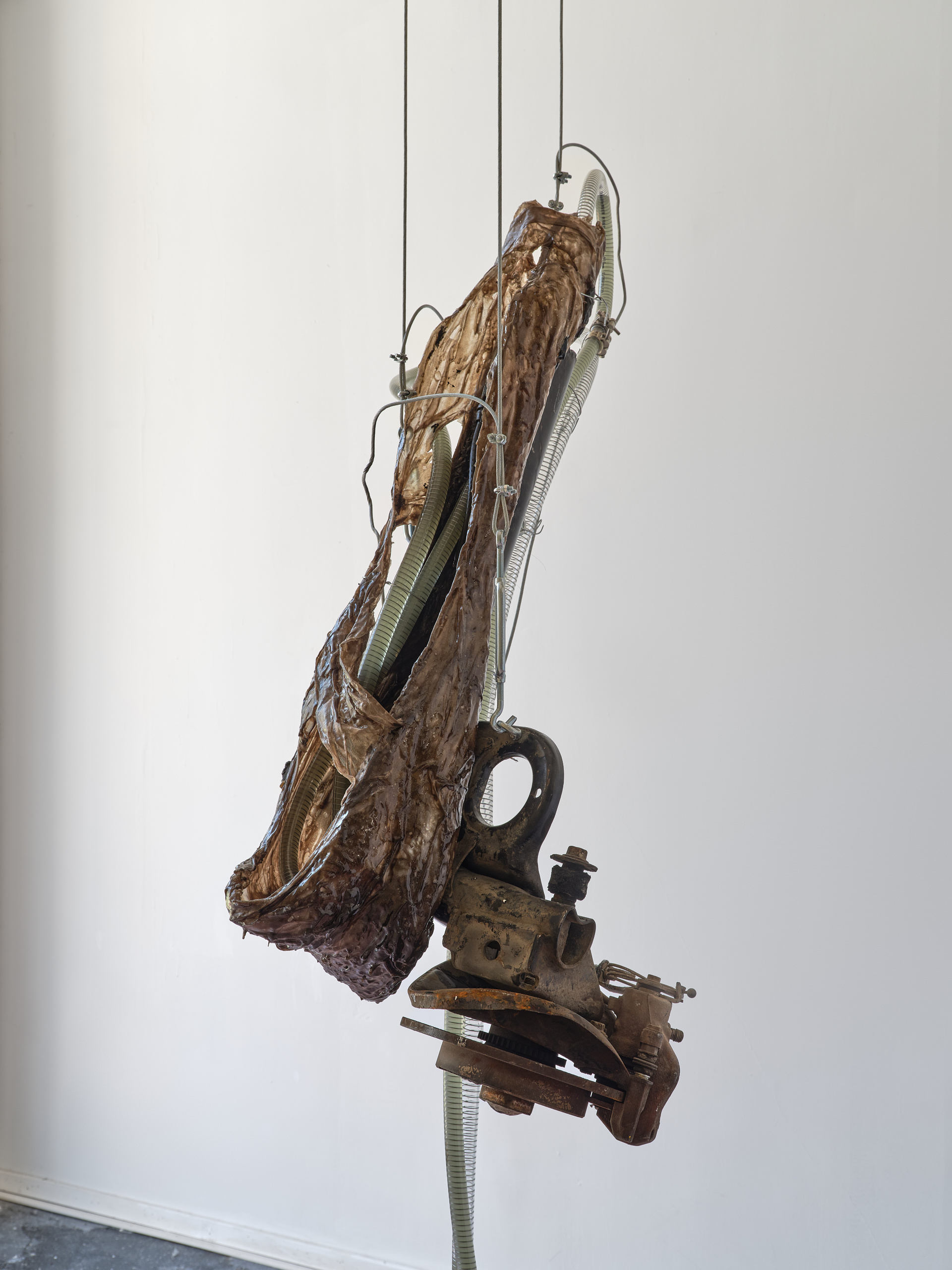
Bone glue, mesh, silicone oil, axle housing, hose, pump
Dimensions variable
Please scan the QR code to follow us on WeChat :天线空间ANTENNASPACE